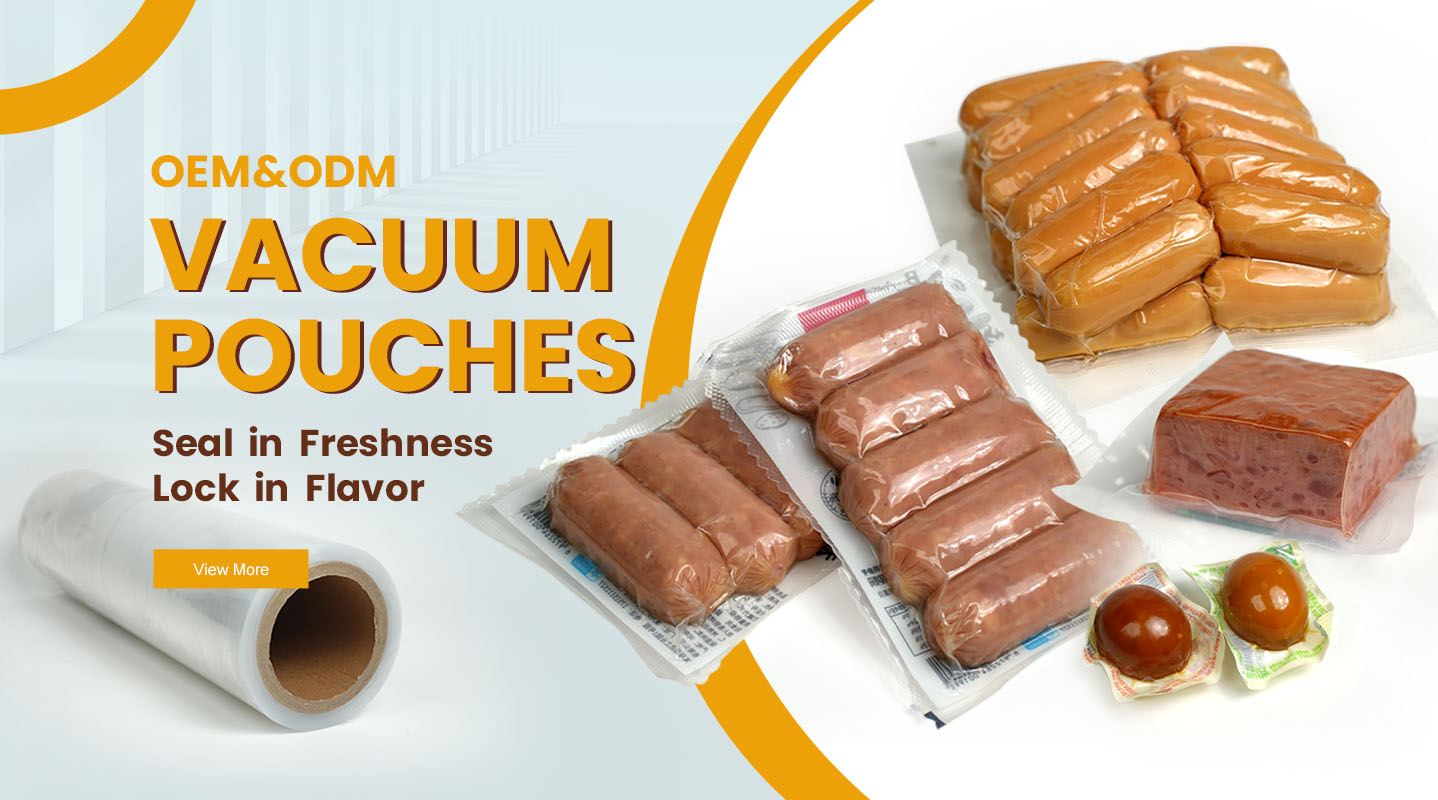
Meat processing requires packaging film that can protect freshness, reduce oxygen exposure, support storage stability, and withstand handling during production, transport, and retail display. For factories handling fresh meat, frozen meat, sliced meat, sausages, or marinated products, choosing the right Meat Packaging Film directly affects shelf life, appearance, leakage control, and customer satisfaction.
A suitable meat processing packaging film should provide strong oxygen barrier performance, stable sealing strength, and good puncture resistance. Meat products often contain moisture, fat, bone edges, or sharp corners, so the film must resist tearing during vacuum packing, thermoforming, or tray sealing.
Common structures include PE, PA/PE, EVOH-based barrier film, and multi-layer co-extruded film. For chilled meat, oxygen barrier and anti-leakage performance are important. For frozen meat, low-temperature flexibility is also necessary to prevent cracking during cold storage.
| Meat Product Type | Recommended Film Feature |
|---|---|
| Fresh beef and pork | High oxygen barrier, strong sealing |
| Frozen meat | Low-temperature resistance |
| Sausage and processed meat | Vacuum resistance, good shrink control |
| Bone-in meat | High puncture resistance |
| Sliced meat | Transparent film with clean display effect |
If the packaging film is too thin or has weak sealing strength, leakage and air return may occur. If the barrier performance is poor, oxidation can affect meat color and freshness. A reliable meat processing supplier usually checks product type, packing method, storage temperature, shelf-life target, and machine compatibility before recommending the film structure.
The best packaging film for meat processing is not one fixed material. It depends on whether the meat is fresh, frozen, cooked, bone-in, or vacuum packed. Buyers should focus on barrier level, thickness, sealing strength, puncture resistance, transparency, and compatibility with existing packaging machines.