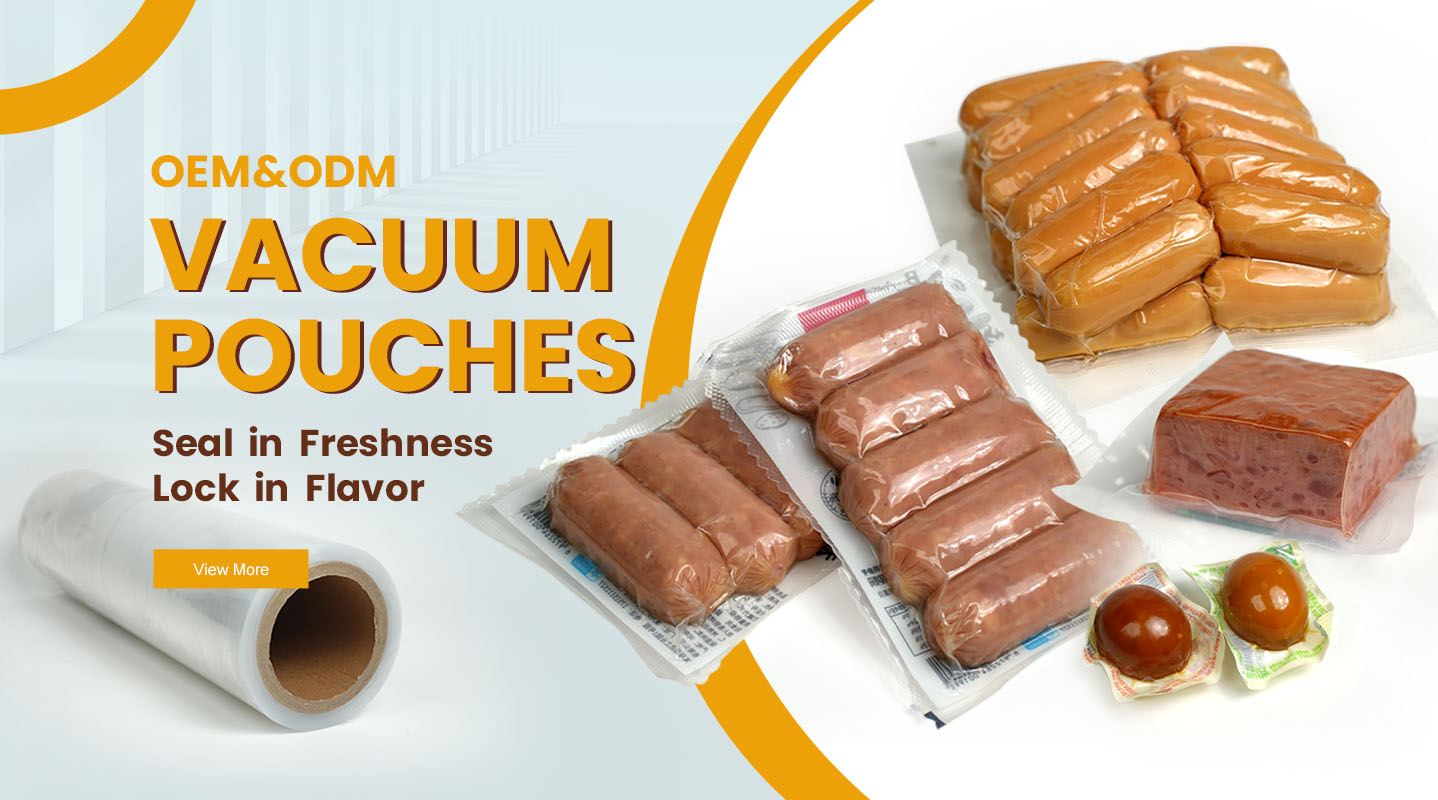
Maintaining airtight food packaging is essential to protect freshness, extend shelf life, and prevent contamination. Air leakage inside packages can lead to oxidation, moisture loss, microbial growth, and deterioration of product quality. Addressing food packaging air leakage requires a combination of appropriate materials, proper sealing processes, and careful handling. Using high-quality vacuum packaging film and following best practices allows manufacturers to minimize air ingress and maintain product integrity throughout distribution.
Food packaging air leakage occurs when packages are not fully sealed or when material integrity is compromised. Several factors contribute to leakage:
Material Defects: Micro-tears, pinholes, or inconsistencies in packaging films allow air to penetrate.
Improper Sealing: Heat sealing with insufficient temperature, pressure, or dwell time can leave weak seals vulnerable to leaks.
Temperature Fluctuations: Expansion and contraction of trapped air during storage or transport can stress the seal.
Mechanical Damage: Handling, stacking, or transport can puncture or stretch packaging films, creating pathways for air ingress.
Addressing these factors is essential for maintaining vacuum conditions and preventing spoilage, especially in perishable items such as meat, seafood, and dairy products.
Choosing the right vacuum packaging film is crucial for reducing air leakage. Films with high tensile strength, puncture resistance, and excellent sealability provide long-term protection. Multi-layer films combining polyamide (PA), polyethylene (PE), and barrier layers such as EVOH offer superior gas and moisture resistance. For perishable foods, films with oxygen transmission rates below 10 cc/m²/24h and water vapor transmission rates below 3 g/m²/24h are recommended.
Modern films are engineered for flexibility and conformability to complex product shapes, reducing stress points that could lead to air pockets. They also maintain performance across a wide range of temperatures, ensuring vacuum integrity during cold storage and transport.
The sealing process directly impacts the airtightness of food packaging. Proper heat sealing requires controlling three critical factors:
Temperature – Sufficient to melt the film layers without degrading material.
Pressure – Evenly applied to compress the film and form a strong bond.
Dwell Time – Enough duration to allow the seal to solidify and stabilize.
Automated sealing machines with real-time monitoring improve consistency, reduce human error, and ensure uniform seal strength. For vacuum packaging, degassing techniques prior to sealing remove residual air, decreasing the risk of leaks and improving shelf life.
Even with high-quality films and optimized sealing, improper handling can compromise airtight packaging. Air leakage can occur if packages are stacked under excessive weight, punctured during transport, or exposed to fluctuating humidity. Implementing structured storage systems and protective cushioning reduces the likelihood of mechanical stress.
Temperature control also plays a role. Thermal expansion of trapped gases can weaken seals if the packaging is exposed to temperature swings. Maintaining consistent storage conditions minimizes stress on films and ensures vacuum conditions are preserved.
Microbial growth inside packages can produce gas, causing swelling and pressure that may compromise seals. Preventing air leakage begins with hygiene and product preparation. Using films with low permeability slows oxygen ingress, limiting microbial respiration and gas production. Antimicrobial layers or modified atmosphere packaging can further reduce gas buildup, protecting the seal and maintaining freshness.
New technologies in food packaging aim to combine barrier performance, mechanical strength, and sealing reliability. Some advanced vacuum packaging films include:
Multi-layer co-extruded constructions for enhanced puncture and tear resistance.
Shrinkable films that mold tightly around irregular product shapes.
Films with integrated barrier coatings that resist moisture, oxygen, and oil migration.
These innovations significantly reduce the chances of food packaging air leakage while preserving product appearance and quality.
| Feature | Typical Standard | Recommended for Leakage Prevention |
|---|---|---|
| Tensile Strength (MPa) | 25 | 35 |
| Seal Strength (N/15 mm) | 12 | 18 |
| Puncture Resistance (g) | 100 | 180 |
| Oxygen Transmission Rate | 20 cc/m²/24h | 10 cc/m²/24h |
| Water Vapor Transmission Rate | 6 g/m²/24h | 3 g/m²/24h |
These specifications reflect the enhanced properties necessary to maintain airtight seals for vacuum-packed foods. By using superior films, manufacturers reduce spoilage, extend shelf life, and improve operational efficiency.
Partnering with an experienced food packaging supplier is essential. A knowledgeable supplier provides guidance on material selection, sealing protocols, and storage recommendations. They can recommend films suitable for specific product types, offer technical support for process optimization, and provide quality assurance to prevent air leakage.
JINBORUN, for example, offers vacuum packaging film engineered for high barrier performance, puncture resistance, and thermal stability. Their team assists clients in implementing effective sealing and handling procedures to ensure airtight packaging, improving product quality and reliability.
Food packaging air leakage arises from material defects, sealing errors, mechanical stress, temperature fluctuations, and microbial activity. Using high-performance vacuum packaging film, optimizing sealing processes, maintaining proper storage, and working with a professional food packaging supplier significantly reduce air ingress. These measures preserve product quality, extend shelf life, and ensure packaged foods remain safe and appealing from production to end users.