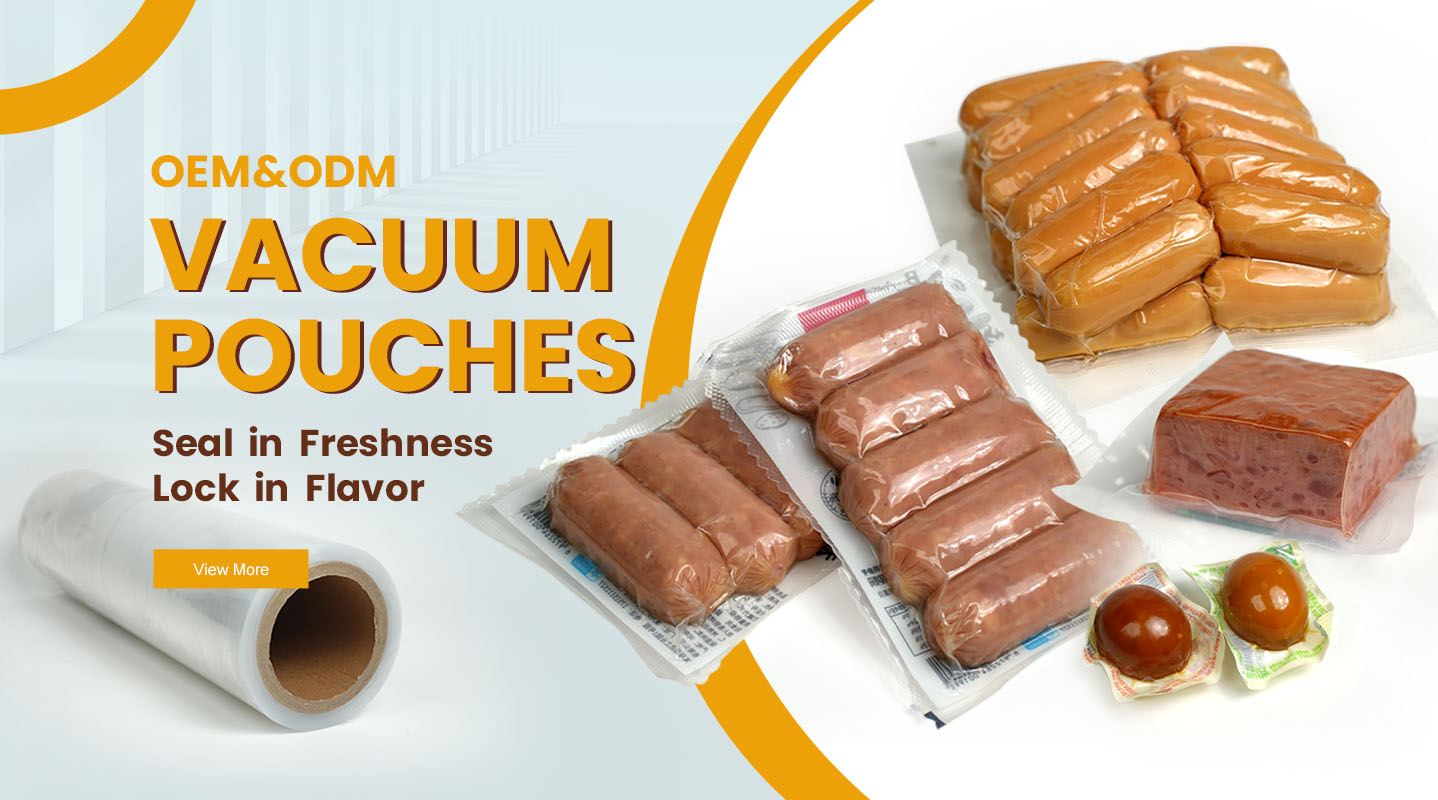
Weak heat sealing is one of the most common reasons food packages leak, open during transport, or lose vacuum after storage. For meat, seafood, sausage, cheese, and ready-to-cook foods, the seal area must resist pressure, moisture, oil, cold-chain movement, and repeated handling. When the seal is not strong enough, even a good Food Packaging Film cannot fully protect the product.
Different foods need different sealing layers. Oily sausage, frozen seafood, bone-in meat, and high-moisture food all place different stress on the seal. If the inner sealing layer is too thin, too stiff, or not compatible with the product surface, the seal may look closed but fail under pressure.
For vacuum-packed meat and seafood, industry testing often uses seal strength values above 15 N per 15 mm as a practical reference for stable commercial packaging. Products with liquid, oil, or sharp edges usually need stronger film structure and better puncture resistance.
Poor heat sealing strength often starts with unstable temperature. If the temperature is too low, the sealing layer cannot melt fully. If it is too high, the film may shrink, burn, or become brittle.
A heat sealing packaging film should have a stable sealing window. This allows packaging machines to run at normal speed without frequent adjustment. JINBORUN can match film structure according to machine type, product weight, storage temperature, and packing speed, helping customers reduce sealing fluctuation during daily production.
Heat sealing depends on three key factors: temperature, pressure, and time. Even when the temperature is correct, low pressure may leave small gaps inside the seal. Short sealing time may also prevent the layers from bonding completely.
| Sealing Factor | Common Problem | Packaging Result |
|---|---|---|
| Low temperature | Incomplete melting | Weak seal edge |
| High temperature | Film damage | Brittle seal |
| Low pressure | Uneven bonding | Air leakage |
| Short sealing time | Poor layer fusion | Seal opens later |
| Dirty sealing area | Contaminated surface | Seal failure |
These problems are especially visible in vacuum packaging, because the package is under continuous pulling force after air removal.
Moisture, grease, powder, meat juice, or seasoning can weaken the seal. In real production, this happens when filling volume is too high, the bag mouth is not kept clean, or the product shifts before sealing.
For high-moisture foods, better film toughness is only one part of the solution. Bag size, loading method, vacuum depth, and sealing position also need to be checked together. JINBORUN supports customers with practical packaging advice, not only film supply, so the final packaging result is easier to control.
Thin film may reduce material cost, but it can also lower seal strength and impact resistance. For light products, thinner film may work well. For frozen seafood, sausage, marinated meat, and bone-in cuts, a stronger structure is usually safer.
European food packaging guidance and common laboratory testing show that tensile strength, seal strength, and oxygen barrier performance should be evaluated together, not separately. A film with good transparency but weak sealing may still cause product loss during storage.
Sealing bars, vacuum chambers, silicone strips, and cutting blades wear over time. When equipment is not checked, one side of the package may seal better than the other side. This creates hidden defects that may only appear after transport.
Regular checks should include seal width, seal appearance, vacuum level, temperature accuracy, and sample burst testing. These simple controls help factories find problems before bulk packing begins.
JINBORUN focuses on flexible food packaging films for vacuum and high-barrier applications. We can provide film options with strong sealing performance, good puncture resistance, stable thickness, and suitable barrier properties for chilled or frozen distribution.
As a heat seal supplier, our team can help review product type, packing machine, storage method, and target shelf life before recommending film structure. This makes the selection more practical and reduces repeated trial costs.
Poor heat sealing strength is usually not caused by one single issue. Film structure, sealing temperature, machine pressure, product residue, film thickness, and equipment condition all affect the final result. Better sealing starts with choosing the right material and controlling the packing process carefully.
JINBORUN provides reliable packaging film solutions for food producers that need stronger seals, cleaner package appearance, and more stable performance during storage and transportation.