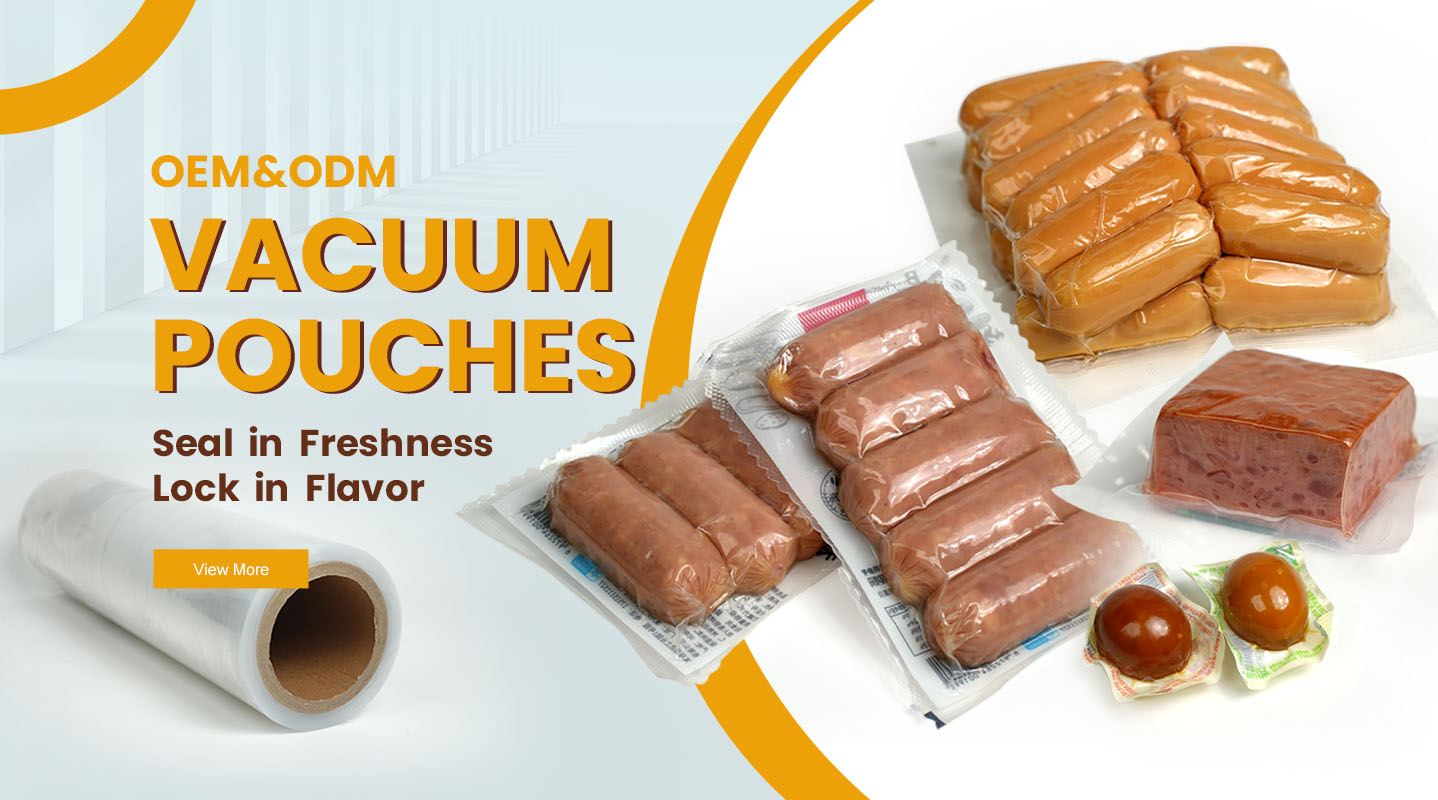
Seafood packaging is a critical part of preserving freshness, extending shelf life, and ensuring food safety. When seafood packages turn loose during storage or transportation, it causes quality degradation, microbial growth, and customer dissatisfaction. Understanding the reasons behind this issue helps businesses choose the right materials and processes to maintain product integrity from factory to market.
For companies that rely on seaFood Packaging Film and Seafood Vacuum Packaging Film, recognizing root causes of loose packaging helps reduce waste and improves reliability. This article analyzes technical, environmental, and operational factors that contribute to loose seafood packaging and offers insights based on manufacturing expertise.
Packaging serves as the primary barrier against oxygen, moisture, and contaminants. For seafood products, packaging integrity directly affects oxidation rates and microbial activity, which are especially sensitive due to seafood’s perishable nature.
The film’s oxygen transmission rate (OTR) and water vapor transmission rate (WVTR) play significant roles in maintaining a tight seal. High OTR allows oxygen to enter the package, accelerating spoilage and bacterial growth. Similarly, high WVTR results in moisture exchange, leading to package loosening due to gas expansion inside the package.
In segmented testing at leading cold chain facilities, products with high OTR films showed package loosening up to 28% more frequently than those using advanced barrier films. A reliable seafood packaging supplier selects materials with low transmission rates to ensure packaging stays firm and protective throughout distribution.
Temperature variations are a key reason seafood packages turn loose. During transportation and storage, seafood must remain within a strict temperature range to prevent spoilage. When temperature rises, trapped air inside the package expands, weakening the vacuum or tight seal and causing the package to appear loose.
The relationship between temperature and gas expansion is governed by basic thermodynamic principles. For every 10-degree Celsius increase in temperature, the volume of trapped gas can expand by approximately 3 percent. For frozen or chilled seafood, this expansion may be sufficient to compromise the vacuum seal.
To counter this, JINBORUN applies high-performance vacuum packaging processes designed for stability under wide temperature ranges. Our seafood vacuum packaging film demonstrates improved dimensional stability at temperatures from minus 20 to 15 degrees Celsius, reducing the risk of loosening during transport.
Vacuum packaging removes air from the package to prevent oxidation, freezer burn, and microbial growth. However, an improper sealing process can trap residual air or fail to remove moisture, resulting in a weak vacuum that loosens over time.
Common sealing issues include:
Insufficient Vacuum Pressure
Low vacuum pressure leaves pockets of air inside the package. Even small amounts of air can expand and loosen packaging in cold chain transit.
Inconsistent Heat Sealing Temperature
Sealing at temperatures too low may not create a strong bond, while too high can degrade film performance. Both conditions lead to seal failure and loose packaging.
Adopting automated vacuum systems with real-time monitoring ensures consistent vacuum levels and sealing temperature. JINBORUN’s manufacturing lines feature controlled vacuum chambers calibrated for seafood packaging, reducing variations and improving overall sealing performance.
The material properties of the packaging film directly influence performance. Films with poor elasticity, weak sealability, or low puncture resistance are more likely to fail during handling, storage or shipping.
Key material factors include:
Tensile Strength
A strong film resists stretching and tearing under pressure. Lower tensile strength increases the chance of micro-tears that lead to loose packaging.
Seal Strength
The ability of a film to form a reliable seal determines how well it holds vacuum conditions. Packaging films with high seal strength maintain firm closure even under stress.
Puncture Resistance
Seafood products often have sharp edges from shells or bones. Films with high puncture resistance prevent small tears that allow air ingress.
Here is a comparison of typical film properties used for seafood packaging:
| Film Property | Minimum Standard Value | Ideal Value for Seafood Packaging |
|---|---|---|
| Tensile Strength | 25 MPa | 35 MPa |
| Seal Strength | 10 N/15mm | 18 N/15mm |
| Puncture Resistance | 100 g | 180 g |
| OTR | 50 cc/m2/24h | 10 cc/m2/24h |
| WVTR | 10 g/m2/24h | 2 g/m2/24h |
These values reflect industry benchmarks for premium seafood vacuum packaging film. By exceeding standard thresholds, JINBORUN’s films provide a robust packaging solution that holds up under demanding conditions.
Microbial growth within the package can generate gases such as carbon dioxide and ammonia. This internal gas production leads to package swelling and loosening. Seafood is especially prone to rapid microbial activity if storage temperatures are not tightly controlled or if packaging and handling are not hygienic.
Effective strategies to reduce microbial activity include:
Ensuring seafood is processed at low temperatures prior to packaging.
Using antimicrobial packaging films when appropriate.
Maintaining clean processing environments to minimize contamination.
JINBORUN manufactures seafood packaging film with integrated barrier layers that slow oxygen penetration, which in turn slows microbial respiration and gas generation. Reduced gas formation within the package helps maintain a tight seal throughout the product’s shelf life.
Even with high-quality packaging and proper vacuum sealing, improper storage and handling can compromise packaging integrity. Rough handling, stacking heavy pallets on top of loosely sealed packages, or exposure to humidity all contribute to compromised seals.
Best practices include:
Using structured pallets and protective cushioning during transport.
Avoiding compressive forces that can rupture or weaken seafood packaging.
Storing packages in controlled environments with consistent humidity levels.
Manufacturers and logistics partners should collaborate to train personnel on appropriate handling procedures. By combining quality materials and proper practices, the likelihood of loose packaging decreases significantly.
Selecting an experienced seafood packaging supplier is critical in addressing package integrity issues. A reliable partner not only provides high-quality films but also offers technical guidance and support throughout the process.
JINBORUN’s approach includes:
Material Testing and Specification Matching
We evaluate product requirements and match them with suitable film specifications to ensure optimal performance.
Process Optimization
Recommendations on sealing pressures, temperatures, and vacuum protocols help customers achieve consistent results.
Quality Assurance Systems
Continuous in-line inspection and performance testing identify potential issues before products leave the factory.
By partnering with an expert supplier, businesses can reduce the incidence of loose packaging and enhance customer satisfaction.
Seafood packages turn loose for a variety of interconnected reasons, including temperature fluctuations, improper vacuum sealing, poor material properties, microbial activity, and suboptimal handling practices. Understanding these factors allows manufacturers and packagers to implement effective solutions.
With high-performance packaging materials and technical expertise, it is possible to maintain product integrity through every stage of the supply chain. For seafood producers and distributors, selecting a packaging partner that prioritizes quality and performance is essential for long-term success.