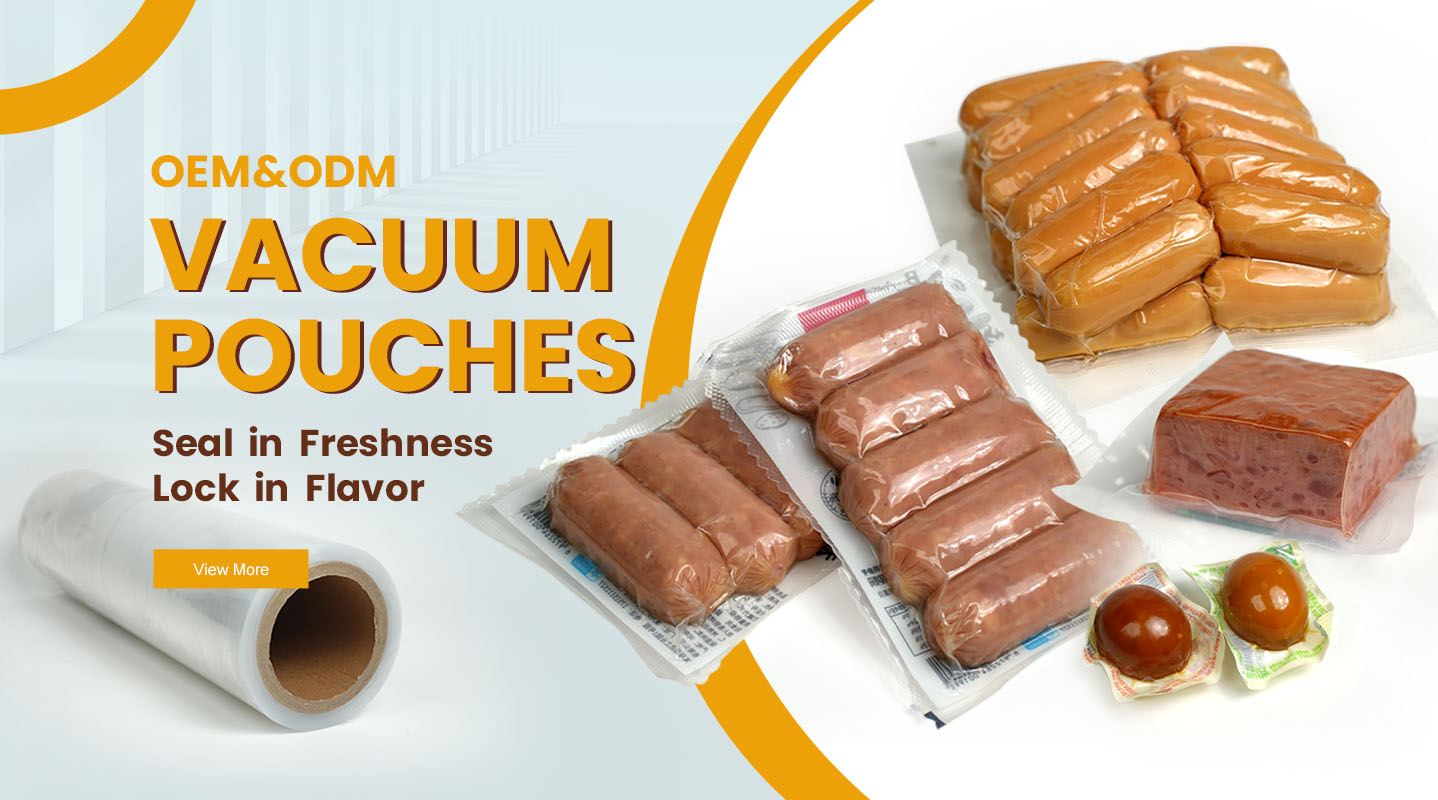
Vacuum Pouch thickness is not a fixed number for every food product. It depends on product shape, weight, storage temperature, sealing method, transport distance, and the level of protection required. A pouch that works well for dry nuts may not be strong enough for frozen meat. A pouch used for smooth sausage may not need the same puncture resistance as bone-in products or seafood with sharp shells.
For food manufacturers, thickness should be selected as part of the full packaging structure. The goal is not simply to make the pouch thicker, but to make it strong enough, sealable enough, and cost-effective for real production.
The first role of thickness is mechanical protection. Thicker pouches usually offer better puncture resistance, stronger handling performance, and more security during storage. However, thickness also affects sealing temperature, machine speed, film flexibility, and material cost.
If the pouch is too thin, it may tear during vacuuming, freezing, stacking, or transport. If it is too thick, sealing may require more heat or longer sealing time. This can slow production or create sealing marks when the machine is not adjusted correctly.
For food vacuum pouches, the best thickness should match the product and process. Meat, seafood, sausage, cheese, frozen food, and dry food each place different pressure on the pouch after vacuuming.
Many buyers estimate pouch thickness by product weight, but shape is often more important. A one-kilogram smooth sausage pack may need less puncture resistance than a smaller frozen fish portion with hard edges. Vacuum packaging pulls the pouch tightly around the product, so any sharp point can create pressure on the film.
For sausage, cooked meat, boneless cuts, and smooth prepared food, the pouch mainly needs sealing strength and oxygen protection. For seafood shells, bone-in meat, and frozen blocks, the pouch must resist harder contact points and cold-chain handling.
JINBORUN reviews product form, storage condition, and packing method before recommending pouch thickness. This helps avoid both under-protection and unnecessary material waste.
Actual specifications vary by material structure and application, but many food vacuum pouches are commonly supplied within medium to heavy-duty thickness ranges. For light dry food, a thinner structure may be enough. For frozen meat or seafood, stronger structures are often required.
| Application | Common concern | Thickness focus |
|---|---|---|
| Nuts and dry food | Moisture and aroma protection | Moderate thickness |
| Sausage products | Seal strength and appearance | Balanced thickness |
| Boneless meat | Vacuum tightness | Medium strength |
| Frozen fish | Puncture and cold storage | Higher toughness |
| Bone-in meat | Sharp edge pressure | Heavy-duty structure |
The USDA explains that freezing slows microbial activity, but product quality still depends on proper packaging and storage. This is why frozen food packaging should protect against air exposure, moisture loss, and physical damage during handling.
Thickness alone does not decide pouch performance. A well-designed multi-layer pouch can perform better than a thicker pouch made with a poor structure. Layers such as PE, PA, and barrier materials can provide sealing, toughness, flexibility, and oxygen protection.
For example, PA can improve mechanical strength, while PE supports sealing performance. Barrier layers can help reduce oxygen transmission for foods that need longer shelf life. This means vacuum pouch thickness should be evaluated together with material composition.
JINBORUN manufactures vacuum pouches and Food Packaging Films for meat, seafood, sausage, frozen food, and related applications. By adjusting structure and thickness together, the pouch can be designed for specific packing conditions.
Sausage products often need a smooth appearance, stable vacuum effect, and strong sealing. Since sausage surfaces are usually more regular than bone-in meat, the pouch does not always need the heaviest thickness. However, the package must still prevent air return, oxygen exposure, and seal failure during storage.
For products using Sausage Vacuum Packaging Film, clarity and tight presentation also matter. A package that looks wrinkled, loose, or cloudy may reduce product appeal even when the food is protected. The film should support clean vacuum results while maintaining enough barrier performance.
Before confirming pouch thickness, the material should be tested on the actual vacuum packaging machine. Different machines have different sealing bar pressure, sealing temperature, vacuum level, and cycle time. A thicker pouch may need a different setting from a thinner pouch.
Testing should include:
Seal strength after packing
Air return after storage
Puncture resistance during handling
Cold storage flexibility
Carton stacking performance
Appearance after vacuuming
A reliable custom pouch supplier should not recommend thickness only by looking at the product name. The supplier should consider machine type, pouch size, food moisture, packing speed, and storage environment.
Choosing a thinner pouch may reduce material cost, but it can increase total cost if leakage, breakage, or rework increases. Food and Agriculture Organization data shows that 13.2 percent of food is lost in the supply chain after harvest and before retail. Packaging failure can become one of the preventable causes of this loss.
Good pouch design should reduce waste, protect product value, and keep production stable. For repeat orders, consistent thickness is also important because changes between batches can affect sealing temperature and machine settings.
The right vacuum pouch thickness depends on the food, package size, material structure, storage temperature, and transport condition. A practical decision should be based on real packing tests rather than only general thickness suggestions.
JINBORUN supports Customized Vacuum Pouch and food packaging film solutions for different food applications. Through material structure design, thickness control, sealing evaluation, and application testing, the pouch can provide reliable protection without unnecessary material cost.
A suitable pouch should seal smoothly, hold vacuum pressure, resist product damage, and stay stable during storage and delivery. When thickness and structure are matched correctly, packaging performance becomes more predictable across bulk production and repeat orders.