Broken bags during frozen transport are rarely caused by one single mistake. Most failures come from a combination of low temperature, product shape, weak sealing, poor film structure, rough handling, and carton pressure. For food manufacturers, a broken bag does more than damage the package. It can expose food to air, create moisture loss, reduce shelf appearance, and increase complaints after delivery.
Freezer conditions are demanding because the packaging must stay flexible while the product becomes hard and heavy. The FDA recommends keeping freezers at 0°F, equal to about -18°C, while USDA guidance explains that freezing slows molecular movement and causes microbes to enter a dormant stage, but quality still depends on proper storage and protection.
Once food is frozen, its surface becomes harder. Fish fins, seafood shells, meat bones, frozen corners, and uneven product shapes can press directly against the packaging film. During vacuum packing, the film wraps tightly around the product. During transport, stacking and vibration increase pressure on the same contact points.
This is why frozen food packaging needs more than basic sealing. The film must resist puncture, flexing, compression, and edge stress. A package that looks safe after packing may still break after several hours of freezing, pallet movement, truck loading, or cold-chain distribution.
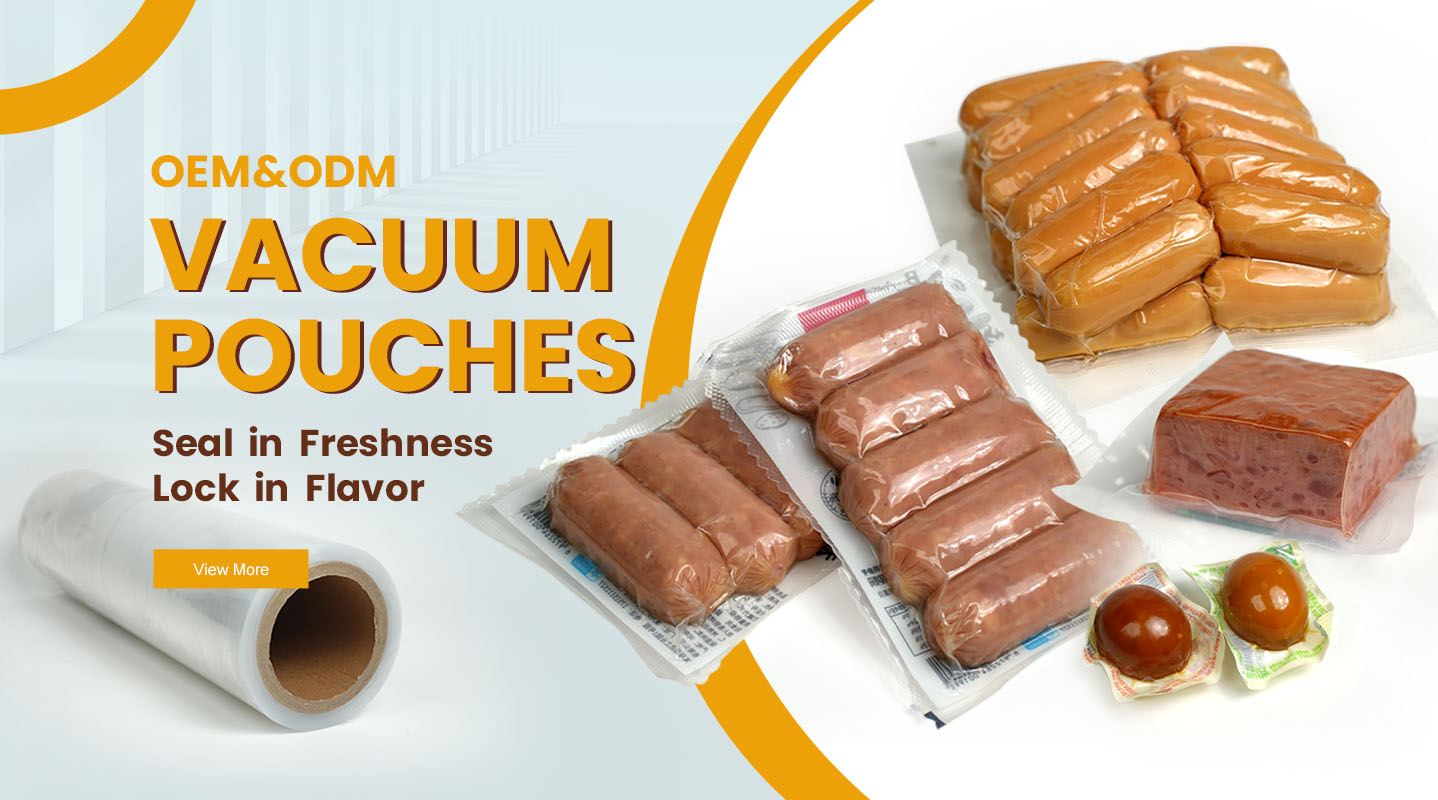
JINBORUN manufactures Food Packaging Films and Vacuum Pouches for meat, seafood, sausage, frozen food, and prepared food applications. For frozen transport, the film structure should be matched with product shape, storage temperature, carton method, and shipping distance.
Some films become stiff in freezing conditions. When a film loses flexibility, it becomes easier to crack near corners, folds, side seals, and vacuum-stressed areas. This problem is more common when the film material is not designed for low-temperature use.
A reliable frozen Meat Packaging Film should keep enough toughness after freezing. It should not crack when cartons are moved, stacked, or exposed to temperature changes during loading. For meat blocks, fish portions, and seafood packs, low-temperature flexibility is just as important as thickness.
Thickness alone cannot solve the problem. A thick film with poor flexibility may still break, while a properly designed multi-layer structure can provide better strength, sealing, and puncture resistance without unnecessary material waste.
Not all broken bags are caused by punctures. Some failures start from the seal area. If the sealing temperature, pressure, or time is not suitable, the seal may look closed but remain weak. After freezing, the seal area can face extra stress from product contraction, vacuum tension, and carton compression.
Moisture, oil, meat juice, or seafood liquid near the seal can also create small channels. These channels may allow air to return slowly, or they may open wider during transportation. For frozen products, this risk is higher because handling is rougher and the product surface is harder.
A good sealing layer must match the food type and packing machine. JINBORUN can adjust film structures according to sealing method, vacuum level, machine speed, and storage conditions to help reduce air return and seal breakage.
Cold-chain transport includes loading, palletizing, warehouse movement, truck vibration, container shipment, and unloading. Even if the packaging passes factory inspection, repeated movement can reveal hidden weaknesses.
Common transport-related risks include:
| Transport condition | Packaging risk | What should be improved |
|---|---|---|
| Heavy stacking | Seal stress and corner damage | Stronger film structure |
| Truck vibration | Puncture from hard product edges | Better puncture resistance |
| Temperature fluctuation | Film stiffness changes | Low-temperature flexibility |
| Overfilled cartons | Compression damage | Correct carton spacing |
| Rough loading | Scratches and pinholes | Better handling control |
A professional frozen packaging supplier should not only provide film rolls or bags. The supplier should understand how the package performs after freezing, stacking, and shipment.
Broken or leaking bags can expose frozen food to air. This may cause freezer burn, surface drying, color change, and texture loss. According to FAO data, 13.2 percent of food is lost in the supply chain after harvest and before retail. Packaging failure is one of the practical risks that can increase loss before food reaches the market.
For seafood and frozen meat, air exposure can also affect odor control and appearance. Buyers may reject products not because the food is unsafe, but because the package looks damaged or the product no longer meets expected quality.
Different frozen foods require different packaging designs. Frozen fish may need puncture resistance and moisture control. Frozen meat may need strong sealing and impact resistance. Sausage may need oxygen protection and smooth appearance. Prepared food may need reliable sealing and good transparency.
JINBORUN’s Frozen Meat Food Packaging Film solutions can be designed with suitable material layers for strength, sealing, barrier performance, and low-temperature use. This helps reduce broken bags during storage and shipment while supporting product appearance and freshness.
Broken bags are easier to prevent before mass production than after goods are already in transit. Before confirming a large order, the film should be tested with real food, real packing machines, real sealing settings, and real freezing conditions.
Important checks include:
Seal strength after freezing
Puncture resistance on product edges
Film flexibility at low temperature
Thickness consistency across rolls
Vacuum tightness after storage
Carton stacking pressure
Transport simulation when needed
JINBORUN focuses on food packaging film manufacturing with attention to material structure, production stability, and application support. For frozen transport, packaging must protect the product through freezing, warehousing, loading, shipping, and delivery. When film structure, sealing performance, and handling methods are properly controlled, broken bags become easier to reduce and product quality remains more stable throughout the cold chain.