Cutting packaging expenses should not mean using the thinnest film or choosing the lowest quotation. For food manufacturers, a cheaper package can become expensive when it causes leakage, poor sealing, product waste, machine stoppage, or customer complaints. The real goal is to lower packaging cost through better material matching, stable production, and fewer hidden losses across storage, filling, sealing, transport, and retail handling.
The Food and Agriculture Organization reports that 13.2 percent of food is lost in the supply chain after harvest and before retail, while UNEP’s 2024 Food Waste Index reports that another 19 percent is wasted at retail, food service, and household levels. These figures show why packaging cannot be treated as a simple consumable. Good packaging helps protect product value before the product reaches the market.
Many purchasing decisions start with price per kilogram or price per square meter. That is understandable, but it is not enough. A low-cost film may create higher waste if it has unstable thickness, weak sealing, poor puncture resistance, or unsuitable barrier performance.
For meat, seafood, sausage, frozen food, and prepared food, the package must handle product moisture, oxygen exposure, vacuum force, freezing, stacking, and cold-chain movement. When one of these factors is ignored, the cost saved on film may be lost through rework, rejected cartons, product claims, or slower packing speed.
A better cost review should include:
Film usage per pack
Scrap rate during packing
Leakage rate after storage
Machine downtime
Product return risk
Shelf-life performance
Carton and transport stability
This approach makes packaging procurement more accurate because it connects price with real production results.
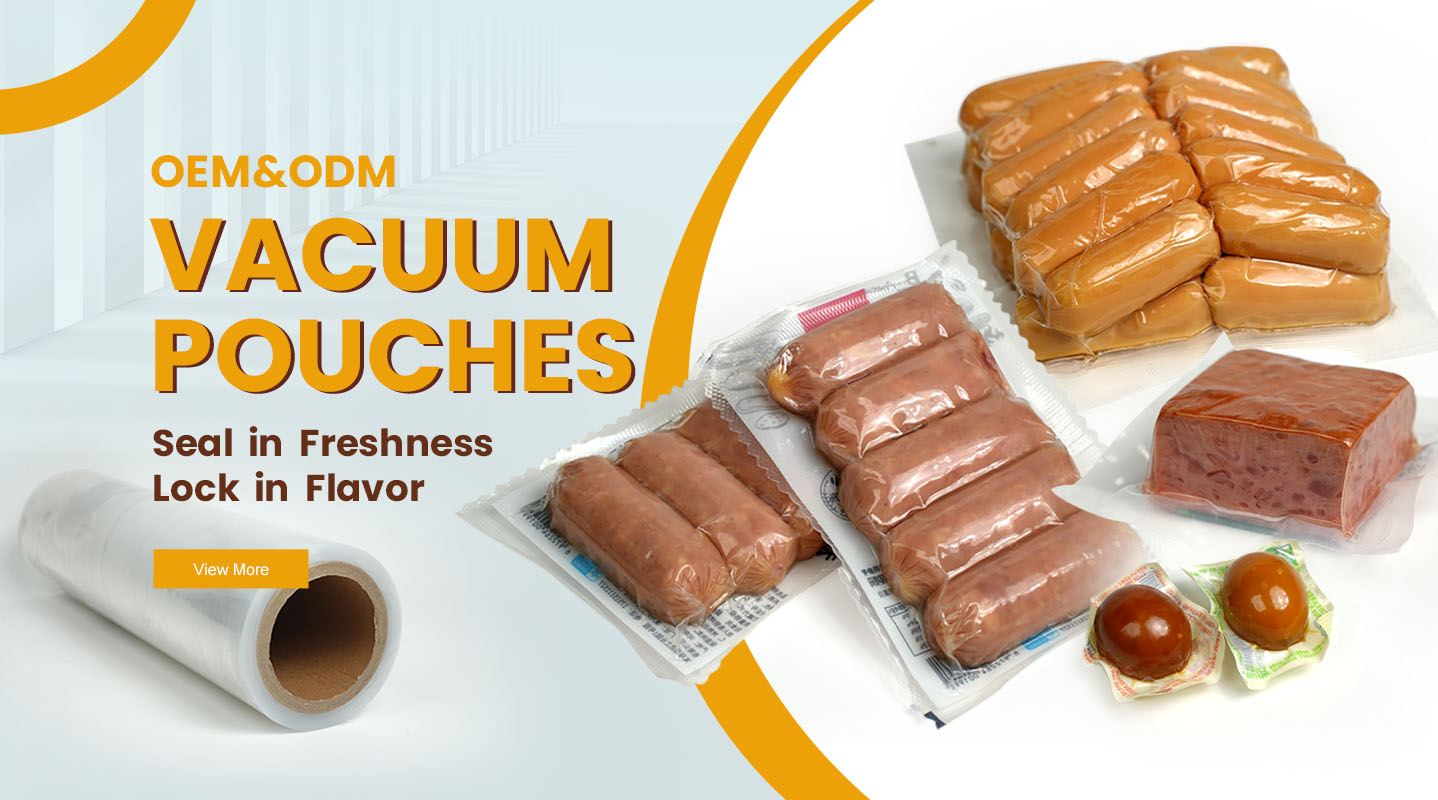
Different foods need different protection levels. A Vacuum Pouch for nuts does not need the same film structure as frozen fish. A sausage film does not work under the same stress as bone-in meat packaging. Using the same structure for every product can either waste material or increase quality risk.
JINBORUN manufactures co-extruded packaging films and Vacuum Pouches For Food applications. By adjusting film materials, thickness, sealing layers, and barrier layers, the package can be designed around the actual product instead of using an oversized solution.
| Product type | Main packaging risk | Cost control focus |
|---|---|---|
| Frozen meat | Puncture and freezer damage | Strong structure without excess thickness |
| Seafood | Moisture and odor transfer | Barrier design and seal reliability |
| Sausage | Oxygen exposure and appearance | Stable barrier and clean forming |
| Nuts | Aroma loss and air return | Proper sealing and moisture control |
| Prepared food | Leakage and display quality | Balanced clarity and strength |
Thickness reduction is common in cost-saving discussions, but it should be done carefully. If the downgauged film loses sealing strength or puncture resistance, the result may be more rejected packs. A thinner film only saves money when it still performs correctly during packing and distribution.
The Flexible Packaging Association states that flexible packaging requires less water and energy to manufacture and transport than many rigid packaging formats, and it provides a high product-to-package ratio. This gives food manufacturers room to improve cost efficiency, but the saving must come from proper design rather than random material reduction.
A well-designed cost effective packaging film may use a smarter multi-layer structure instead of simply increasing thickness. For example, a barrier layer can be added only where protection is needed, while sealing and support layers are adjusted for machine stability.
Seal failure is one of the fastest ways to lose profit. A pack that looks acceptable after sealing may leak during cold storage, shipment, or shelf display. For vacuum-packed food, air return can damage appearance and reduce buyer confidence.
Common causes include seal contamination, wrong sealing temperature, poor film flatness, unstable thickness, and unsuitable inner sealing layers. Reducing seal failure is one of the most practical ways to reduce packaging cost for food because it lowers rework, waste, and complaints at the same time.
JINBORUN supports customized film structures for different packing conditions, including vacuum packaging, thermoforming packaging, and laminated food packaging. This helps match the film with machine speed, sealing temperature, product moisture, and storage conditions.
Not every product needs the highest barrier structure. Over-design can increase cost without improving sales or storage results. However, under-design may cause oxidation, odor loss, freezer burn, or shorter shelf life.
For seafood, meat, sausage, and frozen meals, barrier performance is often necessary because oxygen and moisture can affect color, flavor, and texture. For products with shorter turnover cycles, a moderate barrier structure may be enough. The key is to define the product’s real storage time, temperature, distribution distance, and display method before selecting the film.
JINBORUN’s Food Packaging Film solutions can be adjusted according to these requirements, allowing buyers to avoid both excessive material cost and insufficient protection.
Cost control depends on consistency. If every roll performs differently, the factory must spend more time adjusting sealing temperature, machine tension, forming conditions, and packing speed. This increases labor cost and reduces output.
Stable extrusion, winding control, and thickness inspection help reduce variation between batches. For automatic food packaging lines, this is especially important because unstable film can cause wrinkles, film breakage, poor forming depth, and lower efficiency.
The U.S. Environmental Protection Agency reports that containers and packaging accounted for 82.2 million tons of municipal solid waste in 2018, equal to 28.1 percent of total municipal solid waste generation. Better material planning, stable production, and lower scrap rates help reduce both operating cost and unnecessary packaging waste.
Smart packaging cost reduction should start before mass production. JINBORUN can support food packaging projects by reviewing product type, storage condition, pack size, sealing method, machine type, and target shelf life. This makes the final structure more practical for real production.
A strong cost-saving plan usually includes:
Choosing the right barrier level
Avoiding unnecessary film thickness
Improving seal strength
Reducing packing-line scrap
Keeping roll quality stable
Matching film to cold storage needs
Supporting custom sizes and structures
Quality and cost do not need to conflict. The right packaging film should protect food, run smoothly on equipment, reduce waste, and keep unit cost under control. JINBORUN helps manufacturers find this balance through material structure design, controlled production, and application-based packaging support.