Cold storage is one of the hardest environments for flexible packaging materials. Food products may look stable after freezing, but the packaging film is still under pressure from low temperature, moisture, sharp product edges, vacuum force, stacking weight, and repeated handling. When the wrong film structure is used, small weaknesses can become cracks, leaks, poor sealing, or loss of product appearance during storage and transport.
For manufacturers of meat, seafood, sausage, frozen food, and prepared food, packaging is not only a container. It protects freshness, controls oxygen exposure, supports cold-chain logistics, and reduces complaints after delivery. That is why cold storage packaging should be designed according to product type, storage temperature, sealing method, and transport conditions.
Many packaging failures start with material brittleness. At room temperature, a film may feel soft and flexible. After freezing, the same film can become harder and less resistant to bending. When workers load cartons, stack frozen products, or move vacuum-packed food between cold rooms and trucks, the film may suffer folding stress or impact stress.
The U.S. Food and Drug Administration notes that food stored at 0°F or -18°C can remain safe when properly handled, but quality decreases over time. This is important for packaging design because the film must protect not only safety, but also texture, color, aroma, and moisture retention during storage.
For frozen packaging, the film structure must keep enough flexibility at low temperature. A weak structure may crack at corners, edges, or sealed areas. This problem is more obvious for fish with bones, frozen meat blocks, seafood shells, and irregular food shapes.
Packaging film failure is often not caused by one factor. It usually comes from a mismatch between material structure and application. For example, a film with poor puncture resistance may fail when used for bone-in meat. A film with unstable sealing layers may leak after freezing. A film with poor oxygen resistance may cause meat color changes or flavor loss.
JINBORUN focuses on co-extruded Food Packaging Films and vacuum packaging solutions. By adjusting layers such as PE, PA, and high barrier materials, the film can be designed for sealing strength, puncture resistance, transparency, flexibility, and oxygen protection.
| Common failure | Possible cause | Manufacturing focus |
|---|---|---|
| Cracking after freezing | Film becomes brittle at low temperature | Flexible material structure |
| Air leakage | Weak seal strength or damaged edge | Stable sealing layer |
| Freezer burn | Poor moisture protection | Better barrier design |
| Fish odor transfer | Insufficient oxygen and odor barrier | Multi-layer film structure |
| Machine stoppage | Uneven thickness or tension | Production consistency |
A barrier film is used to reduce oxygen, moisture, and odor transfer. This is important for meat, seafood, sausage, and frozen food because oxygen can affect color, flavor, and freshness. However, not every barrier film performs the same under cold and humid conditions.
Studies published in food packaging research have shown that EVOH is widely used for oxygen barrier performance, while moisture can reduce its gas barrier ability. ScienceDirect research on EVOH packaging materials also reports that EVOH can absorb more than 10 percent moisture by weight under saturated humidity conditions. This explains why a proper multi-layer structure is important. The barrier layer needs protection from surrounding layers so the whole film can perform more consistently.
For products such as Frozen Food Fish Packaging Film, this point matters because fish and seafood often carry surface moisture. The packaging must resist oxygen transfer while also handling wet surfaces, freezing, thawing, and cold-chain movement.
Many buyers first notice failure as air return inside vacuum packs. The product was sealed tightly at the factory, but after cold storage, the bag becomes loose. This problem can come from contamination at the seal area, unsuitable sealing temperature, weak sealing layers, uneven thickness, or excessive stress after freezing.
When discussing packaging failure in low temperature, sealing performance must be tested together with storage conditions. A film that seals well at normal temperature may still fail if the sealing layer is too stiff after freezing. For vacuum-packed seafood and meat, seal strength should remain stable after cold storage, not only during initial packing.
JINBORUN supports customized film structures for different packaging machines and food categories. This helps reduce mismatch between film, sealing temperature, product moisture, and packing speed.
Cold storage failure can also come from uneven film thickness. Thin spots may not be visible before packing, but they become weak points under vacuum pressure or frozen handling. Thick spots may affect machine running stability, sealing uniformity, and roll film tension.
For automatic packaging lines, thickness consistency is especially important. If the film stretches unevenly or runs with unstable tension, factories may face wrinkles, poor forming depth, film breakage, and higher scrap rates. A reliable film for cold storage packaging should be produced with controlled extrusion, stable winding, and regular inspection.
Different food categories need different film properties. Frozen fish needs puncture resistance and odor control. Sausage packaging needs oxygen protection and good retail appearance. Meat packaging needs sealing strength and resistance to sharp edges. Egg products or prepared foods may need clean sealing, transparency, and stable storage performance.
USDA food safety guidance also states that freezing does not destroy all microorganisms, but it stops their growth while food remains frozen. This means packaging should help maintain product quality throughout storage and distribution, because temperature control and packaging protection work together.
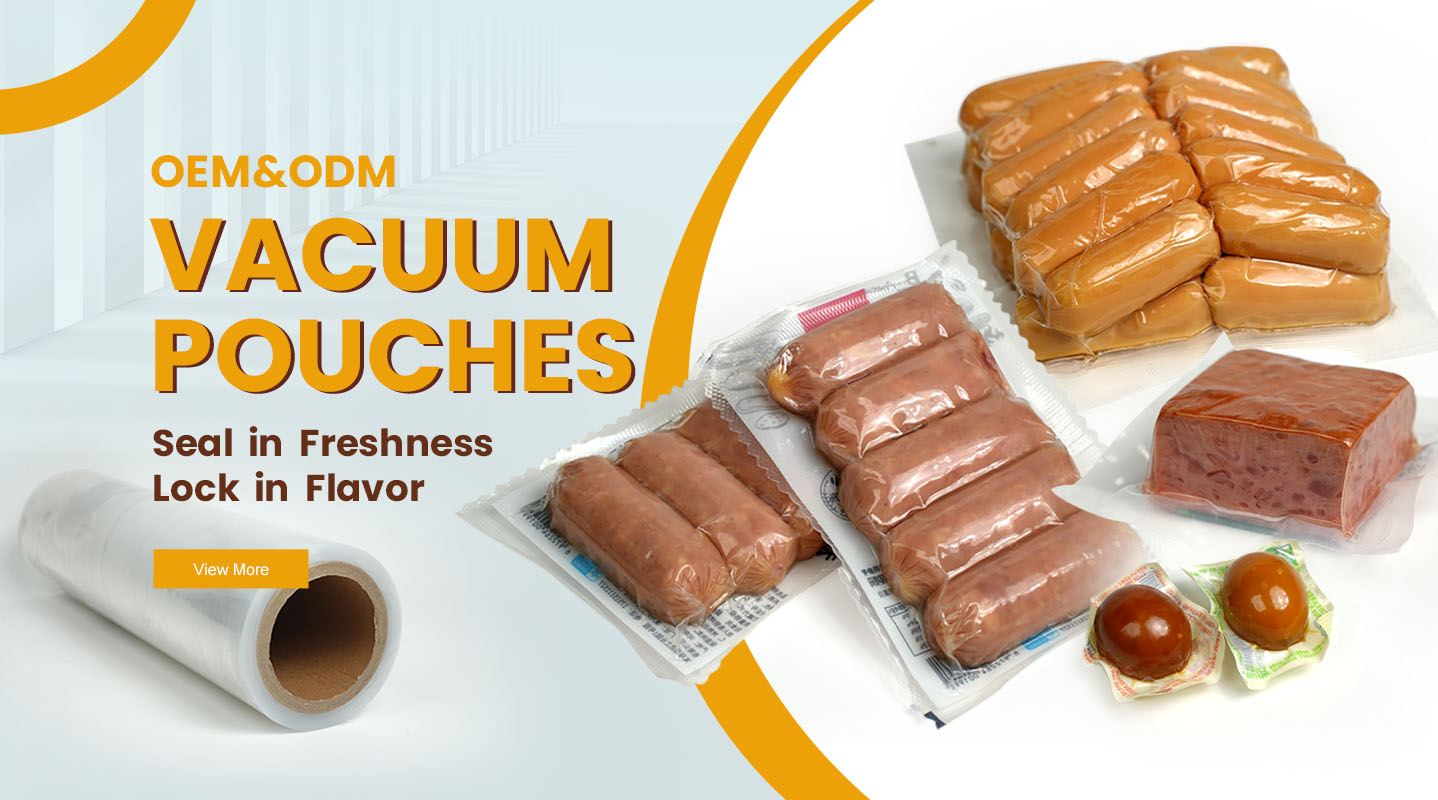
JINBORUN manufactures co-extruded packaging films and Vacuum Pouches for food packaging applications, including meat, seafood, sausage, frozen food, and related products. The advantage is not only supplying film, but also matching material structure with real packing needs.
From a manufacturing perspective, good cold storage film should provide:
Stable sealing strength after freezing
Low-temperature flexibility
Puncture resistance for irregular food shapes
Oxygen and odor barrier protection
Clear appearance for product display
Thickness consistency for automatic packing lines
Custom structures for different machines and applications
Packaging film failure in cold storage is usually preventable. The key is to avoid treating all food films as the same material. Low temperature changes film behavior, and each product creates different pressure on the package. With proper structure design, controlled production, and application-based testing, JINBORUN helps food processors reduce leakage, cracking, freezer damage, and quality complaints during cold-chain distribution.