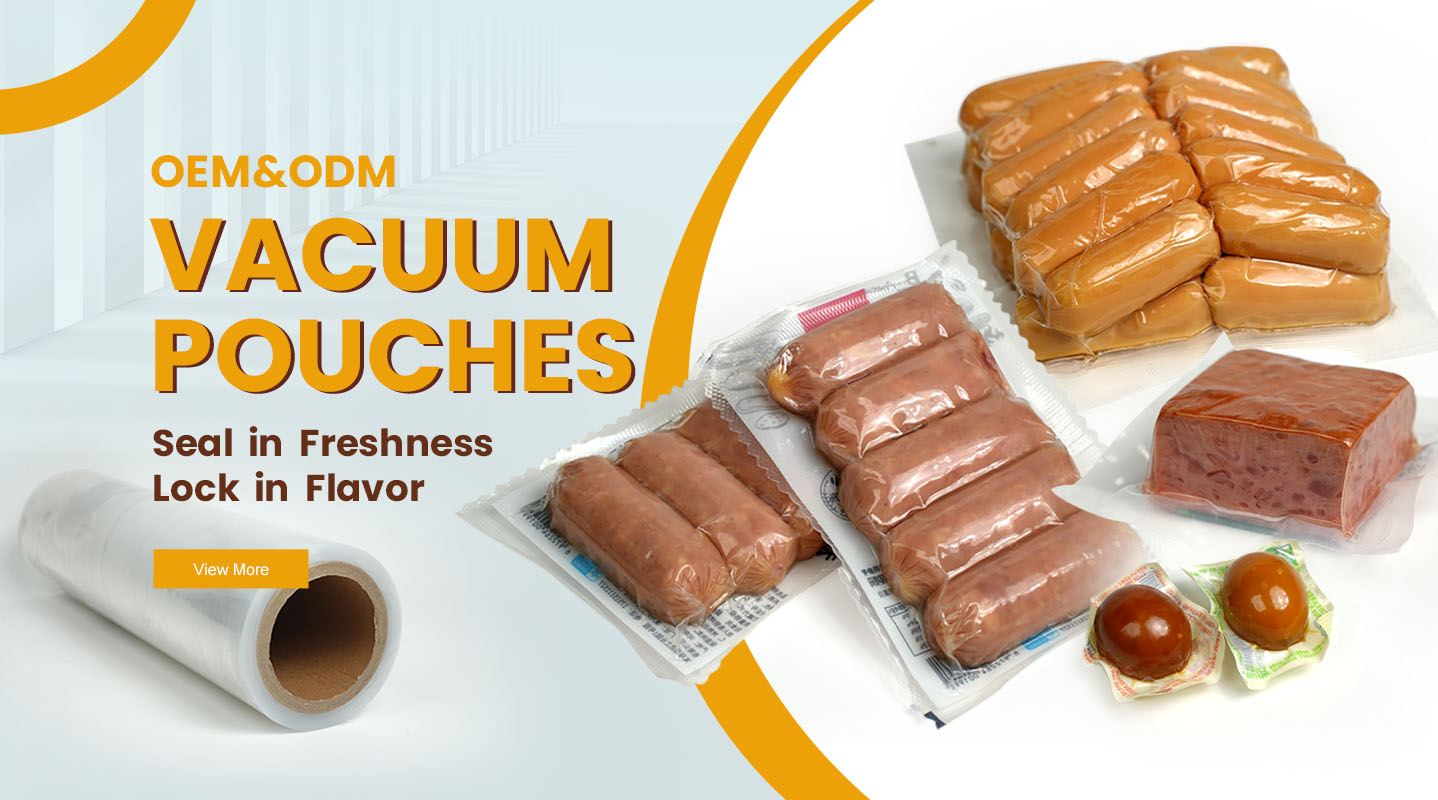
Choosing the right vacuum packaging film is one of the most important decisions in meat processing. Meat is highly sensitive to oxygen, moisture loss, seal failure, and temperature fluctuation during storage and distribution. A weak film may look acceptable on the packing line, yet still lead to purge loss, discoloration, freezer burn, or shortened shelf life once the product reaches the market. According to USDA cold storage guidance, fresh beef, lamb, veal, and pork steaks, chops, and roasts typically keep only 3 to 5 days under normal refrigerated storage, while ground products are commonly limited to 1 to 2 days. That baseline shows why film performance matters so much when processors are trying to protect quality and extend saleable life.
The main job of a meat package is not simply to wrap the product. It must create a controlled barrier that slows oxidation, reduces exposure to external contamination, and supports stable storage conditions. FAO guidance notes that air-tight and vapour-tight packaging helps prolong shelf life, and vacuum packaging works by removing air and then sealing the pack hermetically. For meat products, this is especially valuable because oxygen accelerates fat oxidation, color deterioration, and the growth of aerobic spoilage organisms. A well-structured barrier film therefore does more than improve appearance. It protects flavor, texture, and yield throughout transport and retail handling.
The best vacuum film for meat packaging usually combines several technical properties rather than one single feature.
Oxygen control is the first requirement. Beef, pork, and other fresh cuts lose quality quickly when oxygen enters the pack. JINBORUN highlights oxygen barrier performance as a core feature of its Meat Packaging Film, and this aligns with the wider packaging logic used across the meat industry. Strong oxygen barrier helps slow oxidation and microbial change, especially in chilled distribution.
Moisture management is equally important. Meat naturally releases drip during storage, while frozen distribution creates added stress from dehydration and surface damage. FAO notes that protection against humidity and oxidation is central to prolonging shelf life. For frozen products, JINBORUN also states that its frozen food film is designed to remain stable at very low temperatures and help prevent water loss and grease penetration. That makes moisture barrier essential not only for fresh cuts, but also for Frozen Meat Food Packaging Film used in longer cold-chain transport.
A vacuum pack is only as good as its seal. Once the seal channel fails, oxygen and moisture can re-enter the package and undo the benefit of the barrier structure. Codex guidance defines shelf life in relation to microbiological safety and sensory quality at a specific storage temperature, and packaging method is one of the factors used to establish that life. In practice, this means processors need film that seals consistently across different machine settings, product shapes, and production speeds.
Raw bones, frozen edges, and stacked cartons can easily damage weak film. JINBORUN describes durability and strength as core features of its meat packaging solutions, which is especially relevant for export shipments and long-distance logistics. Stronger film structure reduces the risk of pinholes, abrasion, and vacuum loss during handling.
For vacuum packaging film for beef and other frozen or chilled meat items, low-temperature performance is critical. Films used for frozen distribution need to resist embrittlement and maintain seal reliability after storage and transport. JINBORUN’s frozen food packaging range is positioned for low-temperature tolerance, sealing, and moisture protection, which is a practical requirement for processors serving retail, wholesale, and export channels.
Different meat categories do not all need the same film structure. Fresh primal cuts often require high oxygen barrier, strong puncture resistance, and good transparency. Portion cuts and vacuum-packed beef need balanced shrink or close product contact to limit headspace. Ground meat usually needs tighter control because its larger exposed surface area makes it more vulnerable to oxidation. Frozen meat requires low-temperature toughness and protection against dehydration.
JINBORUN’s product range reflects this segmentation. Its site shows dedicated categories for meat packaging film, beef food packaging film, vacuum food grade packaging film, thermoForming Film, Vacuum Pouches, and other food-grade barrier solutions. The company also lists multilayer structures using materials such as PA, EVOH, PE, and PP across parts of its food packaging portfolio, which is consistent with the way high-barrier food films are commonly engineered for strength, sealability, and oxygen protection.
Vacuum packaging does not replace temperature control or hygiene management, but it can meaningfully improve product preservation when used correctly. One meat science study found that fresh meat stored in vacuum packaging remained acceptable for more than 14 days, while comparable samples in overwrap or high-oxygen modified atmosphere packaging were limited to about 10 days under the same chilled conditions. At the same time, Codex guidance makes clear that shelf life must always be established based on hazards, product type, packaging method, and storage temperature. In other words, good film extends opportunity, but only within a controlled process.
| Requirement | Why it matters for meat preservation | Film feature to prioritize |
|---|---|---|
| Oxygen control | Slows oxidation and spoilage | High barrier layer |
| Moisture retention | Reduces purge loss and freezer burn | Strong moisture barrier |
| Seal reliability | Maintains vacuum through storage and transport | Stable heat sealing |
| Puncture resistance | Prevents leaks from bones and carton pressure | Tough multilayer structure |
| Cold-chain stability | Protects product in chilled and frozen logistics | Low-temperature performance |
| Product presentation | Helps retail acceptance and visual inspection | High clarity and gloss |
The table above reflects the basic technical logic behind effective meat packaging and matches the performance priorities JINBORUN emphasizes across its food film range.
From a manufacturer perspective, film selection should not stop at material description. Processors also need supply stability, customization, and application matching. JINBORUN states that it was established in 2016, has more than 150 employees, and focuses on co-extrusion barrier food films, forming films, vacuum bags, and laminated packaging solutions. Its product lineup covers fresh meat, frozen food, seafood, sausage, and thermoforming applications, which helps buyers source closer to their actual processing needs instead of using one generic structure across all SKUs. That is a meaningful advantage for customers looking for a dependable food packaging manufacturer with both standard and customizable options.
The best film for vacuum-packed meat is a high-barrier, seal-stable, puncture-resistant structure that matches the product’s storage temperature, cut type, and logistics conditions. For fresh beef and chilled meat, oxygen barrier and seal integrity should lead the decision. For frozen products, low-temperature toughness and moisture protection become even more important. A supplier that can offer tailored structures for different meat applications will usually deliver better long-term packaging performance than a one-film-fits-all approach. JINBORUN’s focus on co-extrusion barrier films, vacuum bags, thermoforming solutions, and dedicated meat film categories makes it well suited for processors that need dependable protection, cleaner presentation, and more stable shelf-life performance.