Reducing packaging failure rates starts long before a roll of film reaches the packing line. In food applications, failure usually comes from a mismatch between product characteristics, film structure, sealing conditions, and distribution demands. When the package loses barrier performance or seal integrity, the result is not only waste and complaints, but also added labor, rework, and shelf-life risk. FDA guidance notes that the purpose of a hermetic closure is to provide a barrier to microorganisms and prevent leakage, while later guidance also warns that leaks can form through inadequate seals, rough handling, or pressure buildup during storage.
For food processors, the cost of weak packaging control is wider than a single damaged pouch. EPA, USDA, and FDA reference the 2024 UN Food Waste Index and note U.S. food waste levels of 73 kilograms per person per year in households, 74 kilograms in food service, and 12 kilograms in retail. Globally, FAO has long estimated that nearly one-third of food produced for human consumption is lost or wasted. Better film selection and more stable sealing performance cannot solve every waste problem, but they directly support longer shelf life, safer handling, and lower loss during circulation. (US EPA)
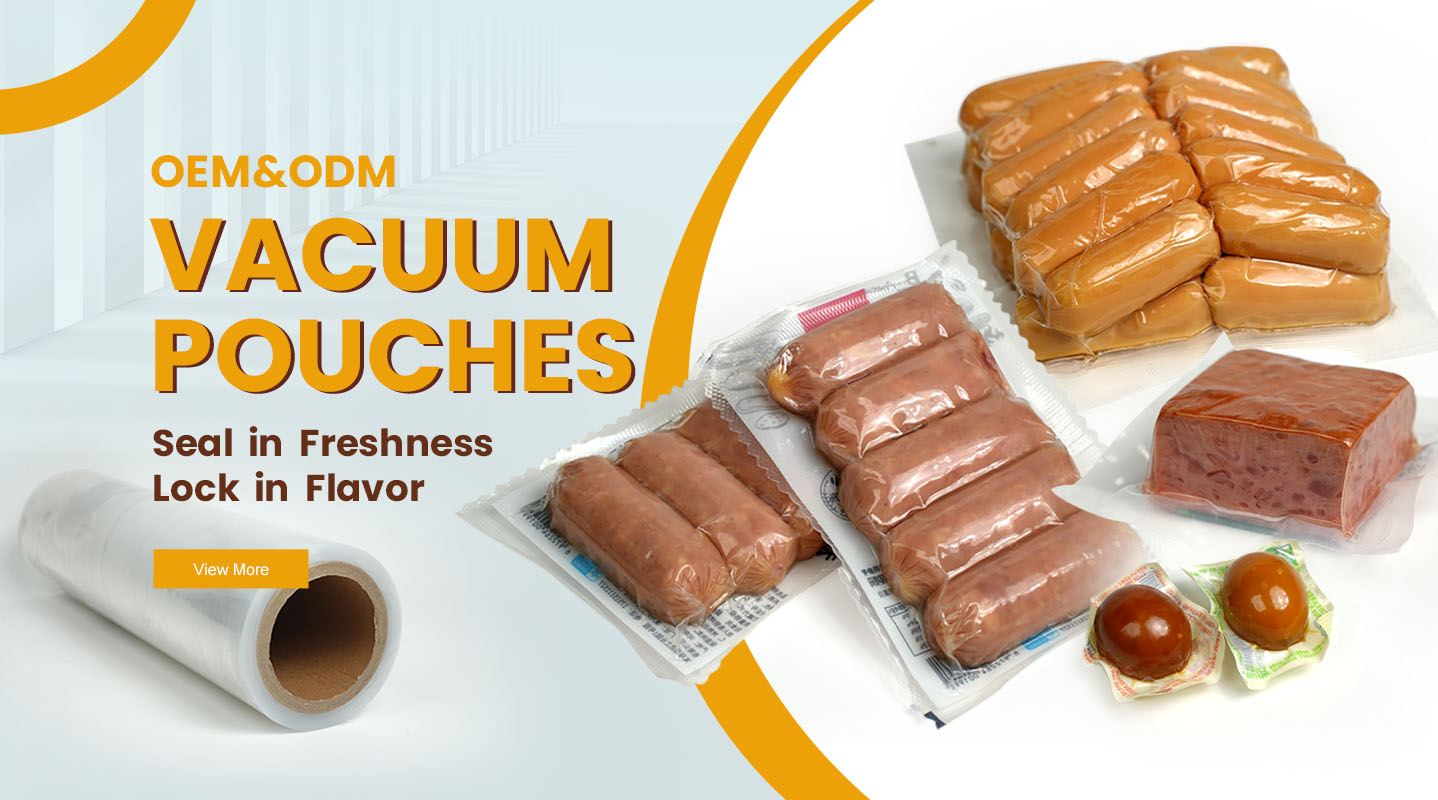
JINBORUN is positioned well for this challenge because its website shows a focused product range in co-extrusion barrier food film, Vacuum Pouches, thermoForming Film, and Printing And Laminated Film. The company states it was established in 2016, has more than 150 employees, operates two multi-layer water quench blown film machines together with multiple advanced production lines, and serves food sectors such as meat, seafood, sausage, and vegetables. Its catalog also shows application-specific solutions for frozen food, vacuum pouches, bone-containing products, fish packaging, and high-temperature barrier structures.
Most failures can be grouped into four root causes. The first is material mismatch. A film that performs well for dry snacks may not hold up for fatty meats, frozen seafood, or sharp bone-in cuts. The second is unstable sealing conditions, including temperature drift, dwell time variation, jaw contamination, and poor line speed control. The third is mechanical stress from thermoforming depth, vacuum pressure, product load, or transport abuse. The fourth is barrier mismatch, where oxygen and moisture protection are below what the product and shelf-life target require. FDA guidance on reduced oxygen packaging also highlights oxygen transmission performance as a meaningful factor in package protection.
When buyers review packaging defects, sealing issues often appear first because they are easy to spot at the end of the line. Yet visible seal failure is often only the final symptom. The deeper cause may be a narrow sealing window, poor hot tack, insufficient puncture resistance, or a structure that cannot stay stable through cold chain storage and transport. That is why material choice and line control must be solved together rather than separately.
Material selection is the first real lever to reduce packaging defects in production. A good packaging film is not simply strong or clear. It must match the product’s oxygen sensitivity, moisture behavior, fat content, storage temperature, and transport distance. JINBORUN describes its multilayer structures using materials such as PA, EVOH, PE, and PP, and explains that these structures are chosen to block oxygen and water vapor while supporting sealing and mechanical strength. Its product information also shows specialized films for frozen products, fish, spicy snacks, sausage, and thermoforming applications.
For chilled meat, vacuum products, and longer-distance distribution, a high barrier film is often the safer route because oxygen ingress can quickly affect color stability, flavor, and shelf life. JINBORUN’s own technical content explains that high-barrier Food Packaging Films are designed to slow the transfer of oxygen, moisture vapor, aromas, oils, and sometimes light. The same content also links barrier design to product stability during filling, sealing, storage, and distribution.
For frozen applications, buyers should put more emphasis on low-temperature flexibility and puncture resistance. JINBORUN’s frozen food and meat packaging pages repeatedly highlight low-temperature tolerance, moisture resistance, strong sealing performance, and resistance to puncture from hard edges and bone points. That matters because a film that seals well in the factory but cracks or pinholes in cold distribution will still create failure in the market.
Even strong material can fail on a weak line. The practical goal is to prevent packaging film failure by stabilizing the full process from unwinding to final inspection. Seal area cleanliness should be controlled first. Powders, oil, meat purge, and product particles in the seal zone are frequent reasons for leaks. Next comes seal window validation. Buyers should verify the real operating range for temperature, pressure, and dwell time rather than relying on a single ideal setting. ASTM publishes F88 and F88M as the standard test method for seal strength of flexible barrier materials, which is widely used as a benchmark in performance verification.
Line teams should also focus on forming depth, stretch uniformity, and package geometry. Deep-draw thermoforming can thin the corners and shoulders of a structure, especially when the selected film was not intended for that cavity shape. Bone-in meat, seafood shell edges, and frozen blocks place extra demand on puncture resistance, so mechanical testing should be part of pre-launch trials rather than a response after claims appear. FDA container examination guidance includes compression and integrity evaluation methods because package failure is not only about sealing heat but also about the package surviving handling forces.
| Failure point | Typical cause | Better material or process choice |
|---|---|---|
| Weak side seal | Narrow seal window or contamination | Use a structure with stable seal layer and validate temperature, pressure, and dwell time |
| Pinholes after transport | Film too thin or low puncture resistance | Upgrade multilayer structure and test against product edges and compression |
| Short shelf life | Barrier level below product need | Choose multilayer oxygen and moisture barrier structure matched to storage route |
| Curling or unstable forming | Film not suited to thermoforming depth | Select forming film designed for draw depth and machine conditions |
| Leaks in frozen chain | Cold brittleness or seal stress | Use low-temperature resistant co-extruded film with strong seal retention |
| Poor retail appearance | Fogging, poor clarity, or collapse | Balance barrier, transparency, and stiffness for the real display environment |
A reliable supplier should not only quote thickness and price. It should discuss product type, packing speed, storage temperature, target shelf life, seal method, and transport route. JINBORUN’s product range and application pages show that it already works across vacuum bags, forming films, barrier films, and laminated structures for meat, seafood, egg products, and frozen food. That breadth is useful because packaging manufacturing works best when the film supplier can recommend structures based on use conditions instead of pushing one universal material.
Buyers should also ask for trial support focused on actual risks. These include seal-strength checks, puncture testing, cold storage validation, and line compatibility review. For products packed under vacuum or modified atmosphere, oxygen control matters even more. FDA states that reduced oxygen packaging can be regarded as packaging with an oxygen transmission rate below 10,000 cubic centimeters per square meter per 24 hours at 24 degrees Celsius in the final package. That threshold is not a full material specification, but it shows why oxygen management cannot be treated as a minor detail in food packaging decisions.
The fastest way to lower failure rates is to stop treating packaging as only a purchasing item. It is a process system that connects film design, sealing behavior, product protection, and logistics performance. When film structure matches the food, when the sealing window is wide enough for real production variation, and when validation includes transport and storage stress, failure rates usually fall in a measurable way. JINBORUN’s focus on co-extrusion barrier film, thermoforming solutions, vacuum pouches, and application-specific food packaging gives buyers a practical base for building more stable lines and more dependable shelf performance.
A strong packaging result is rarely created by one change alone. It comes from selecting the right barrier structure, protecting seal integrity, testing under real conditions, and working with a supplier that understands food application details as well as production realities.