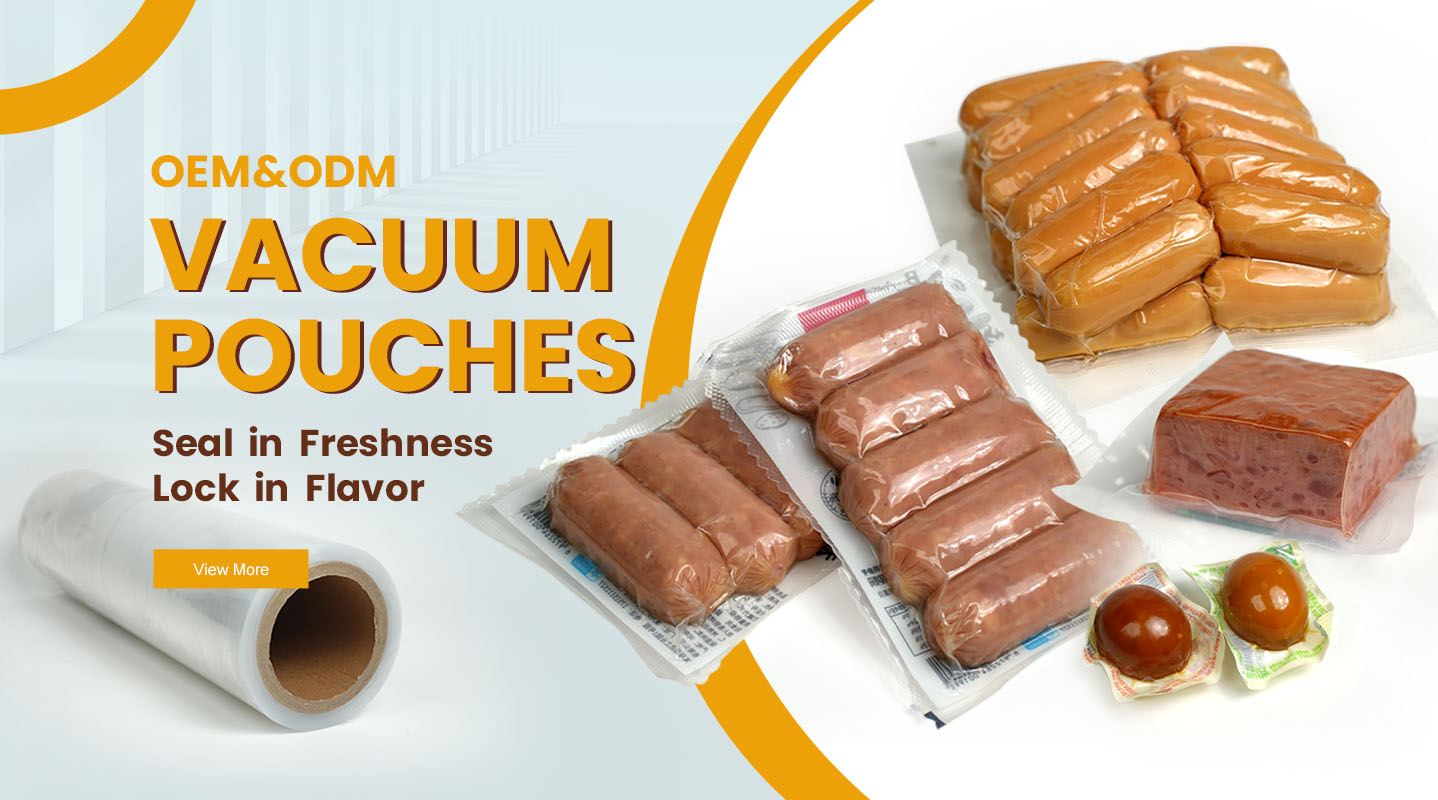
Durability in Food Packaging Film is never decided by one variable alone. It comes from the balance between resin selection, layer structure, sealing performance, puncture resistance, and processing consistency. For buyers comparing options across meat, seafood, frozen food, and vacuum applications, packaging film durability is less about choosing the heaviest film and more about choosing the right structure for the real packing line, storage temperature, and transport risk. JINBORUN focuses on co-extrusion barrier food film and vacuum bags, and its product range covers Forming Film, barrier film, Vacuum Pouches, and laminated solutions for food applications. The company states it was established in 2016 and has more than 150 employees.
One of the first questions buyers ask is whether a thicker film will always last longer. In practice, higher gauge can improve puncture resistance and load-bearing performance, but durability also depends on how that thickness is distributed across layers and whether the film matches the product profile. Sharp bone edges, frozen surfaces, vacuum shrink stress, and long-distance transport can all damage a film that looks strong on paper but lacks the right structure. That is why packaging engineers often evaluate film thickness, multilayer film structure, seal performance, and end-use conditions together rather than as separate decisions.
ASTM D882 is widely used to determine tensile properties of thin plastic films, and ASTM F88 is commonly used to evaluate seal strength. These test methods matter because a durable package must survive both mechanical stress and seal stress. A film with acceptable tensile data but poor seal integrity can still fail on the production line or in cold-chain logistics. Intertek notes that seal strength is crucial to prevent leakage and protect product safety, while hot tack performance is especially important on form-fill-seal operations.
Durability improves when each resin layer is assigned a clear job. PA contributes toughness and puncture resistance. EVOH supports oxygen barrier performance. PE often helps with sealability and moisture resistance. PP may be used where stiffness or process needs require it. On JINBORUN’s site, several product descriptions reference PA, PE, EVOH, and PP in co-extruded food packaging structures, especially for meat, fish, frozen food, and vacuum applications. That matters because the real answer to factors affecting packaging film strength is usually found in composition design, not in single-layer thinking.
This is also why multilayer construction remains so important in food packaging. A recent USDA-linked publication on food packaging and shelf life reported that certain three-layer laminate films showed enhanced barrier performance, with oxygen permeability improving by more than 70 times in the multilayer film studied. That does not mean every laminated structure will achieve the same result, but it clearly shows why well-designed layers can outperform simple monolayer solutions when freshness protection and durability need to work together.
Even a good material formula can underperform if the film is produced with weak thickness control, unstable lamination, or inconsistent sealing behavior. Uneven gauge can create weak points. Poor adhesion between layers can reduce toughness. Inaccurate temperature control during converting can affect seal windows and downstream machine performance. For food manufacturers, this translates into split seals, leakage, scrap, rework, and complaints during distribution.
JINBORUN positions itself around co-extruded barrier food film rather than general plastic supply, and its portfolio includes vacuum frozen food packaging film, vacuum food grade packaging film, sausage high barrier forming film, seafood vacuum bags, and Printing And Laminated Film for food packaging. Its product descriptions emphasize low-temperature tolerance, moisture protection, oxygen barrier, puncture resistance, and multilayer composite construction. These are the characteristics buyers usually look for when they need a durable food packaging film that performs consistently from packing room to shelf.
Not all foods stress packaging in the same way. Frozen products challenge low-temperature toughness. Meat and seafood can require high puncture resistance and stronger oxygen barriers. Vacuum packs demand reliable seal strength and resistance to compression during storage and shipping. Transparent retail packs may also need gloss and clarity without sacrificing structure.
JINBORUN’s application range across pork, beef, seafood, fish, sausage, egg products, and frozen foods shows the practical point: film design should be matched to product risk. A structure that works well for soft bakery filling may not be suitable for bone-in meat or frozen seafood. For this reason, buyers sourcing flexible packaging for food should compare not only price per kilogram, but also failure rate, sealing stability, waste control, and whether the structure truly fits the product. Flexible Packaging Association materials also note that flexible formats generally use fewer resources than many other packaging formats and help protect products, which is important because better protection can reduce spoilage and waste across the supply chain.
| Review point | Why it affects durability | What to confirm |
|---|---|---|
| Thickness consistency | Thin spots become failure points | Gauge tolerance across the roll |
| Layer composition | Each layer handles a different stress | PA, EVOH, PE, PP balance |
| Seal performance | Weak seals cause leakage and returns | Seal strength and hot tack data |
| Product fit | Different foods create different risks | Frozen, vacuum, sharp-edge, oily, wet |
| Line compatibility | Poor machinability increases waste | Forming, filling, sealing stability |
| Logistics environment | Transport can damage weak film | Compression, puncture, cold-chain behavior |
A film that looks economical in quotation form may become expensive once line loss, product returns, and customer complaints are counted. Long-term buyers usually care more about stable conversion, dependable sealing, and repeatable material performance than about chasing the lowest initial cost. Research published in Frontiers notes that packaging plays a central role in preserving food quality, controlling gas and vapor exchange, and extending shelf life, while well-dimensioned packaging materials can contribute to food waste reduction. In other words, durability is not only a packaging issue. It is also a cost-control issue, a shelf-life issue, and a supply-chain reliability issue.
For companies evaluating food film partners, the strongest suppliers are those that can connect material science with actual packing conditions. JINBORUN’s focus on co-extruded barrier films, vacuum bags, forming film, and laminated food packaging gives buyers a narrower and more practical supply profile than a general film trader. When thickness, composition, sealing, and application are aligned from the start, packaging lasts longer, runs better, and protects product value more effectively.