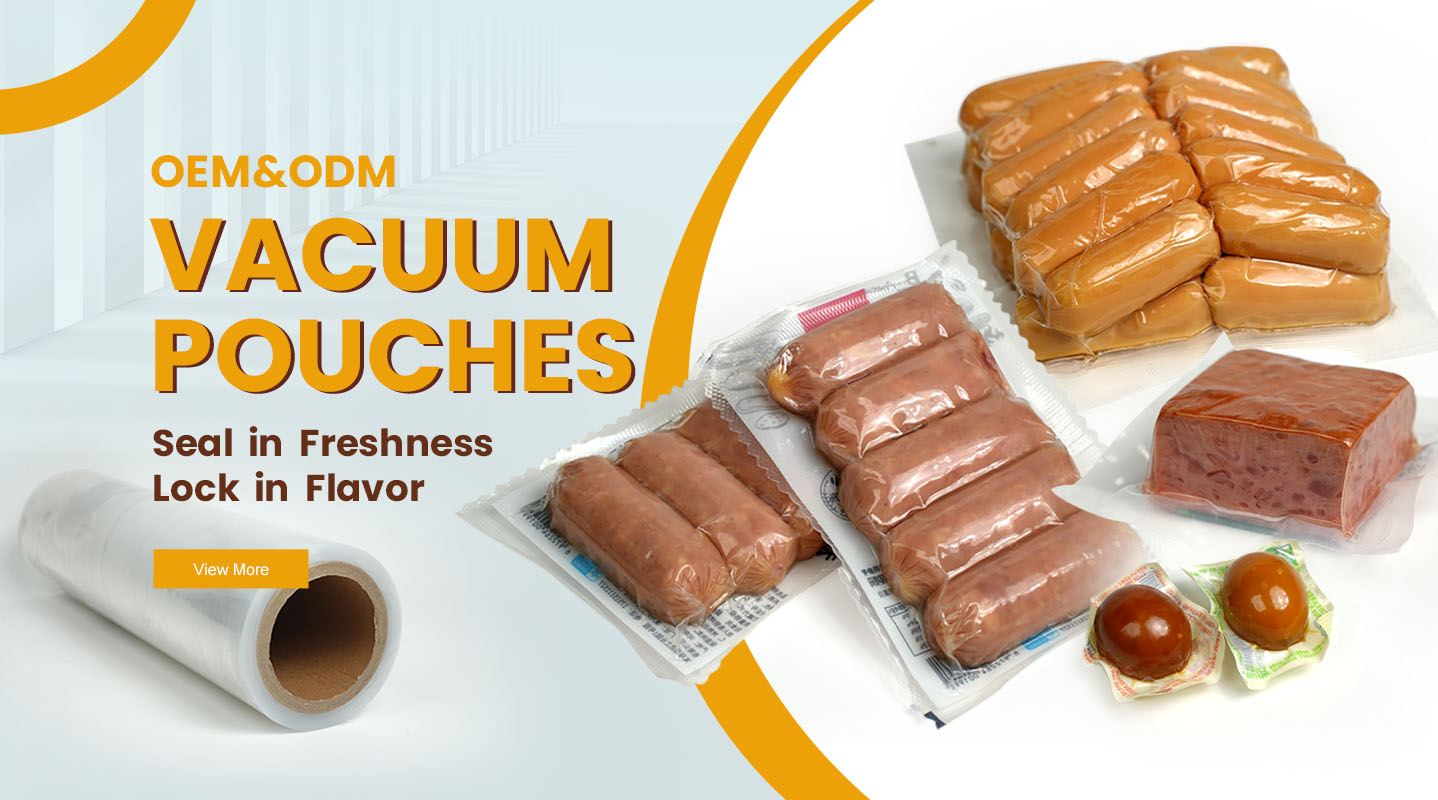
vacuum packaging is not only used for freshness protection. It also affects how food looks on the shelf. For meat, seafood, cheese, nuts, and ready-to-eat products, vacuum packaging film can influence product color, shape, transparency, surface smoothness, and customer confidence.
When air is removed from the package, the film fits closely around the product. This can make the food look compact, clean, and protected. However, if the film is cloudy, wrinkled, too tight, or poorly sealed, the product may look low-quality.
Clear film helps customers see product color and texture. For retail food, high transparency supports stronger shelf appeal.
Stable vacuum reduces air pockets and loose film. Air return can make the package look swollen or defective.
Good film flatness and proper pouch size help create a neat package shape. Oversized pouches may wrinkle, while undersized pouches may stress the seal.
For meat and seafood, oxygen barrier performance can affect color stability. Poor barrier film may lead to oxidation and darker appearance.
| Display Need | Film Feature |
|---|---|
| Clear product view | High transparency |
| Clean package shape | Proper thickness and pouch size |
| Longer freshness | Oxygen barrier |
| Fewer wrinkles | Good film flexibility |
| Retail handling | Strong seal strength |
Shelf appearance can affect repeat orders and customer trust. A package that leaks, wrinkles, fogs, or loses vacuum may be rejected even before the food is opened. A professional retail packaging supplier should help buyers choose shelf display packaging film according to product type, retail channel, and storage condition.
Vacuum packaging must balance protection and presentation. Good film should keep food fresh while making the product look clean and reliable on the shelf.