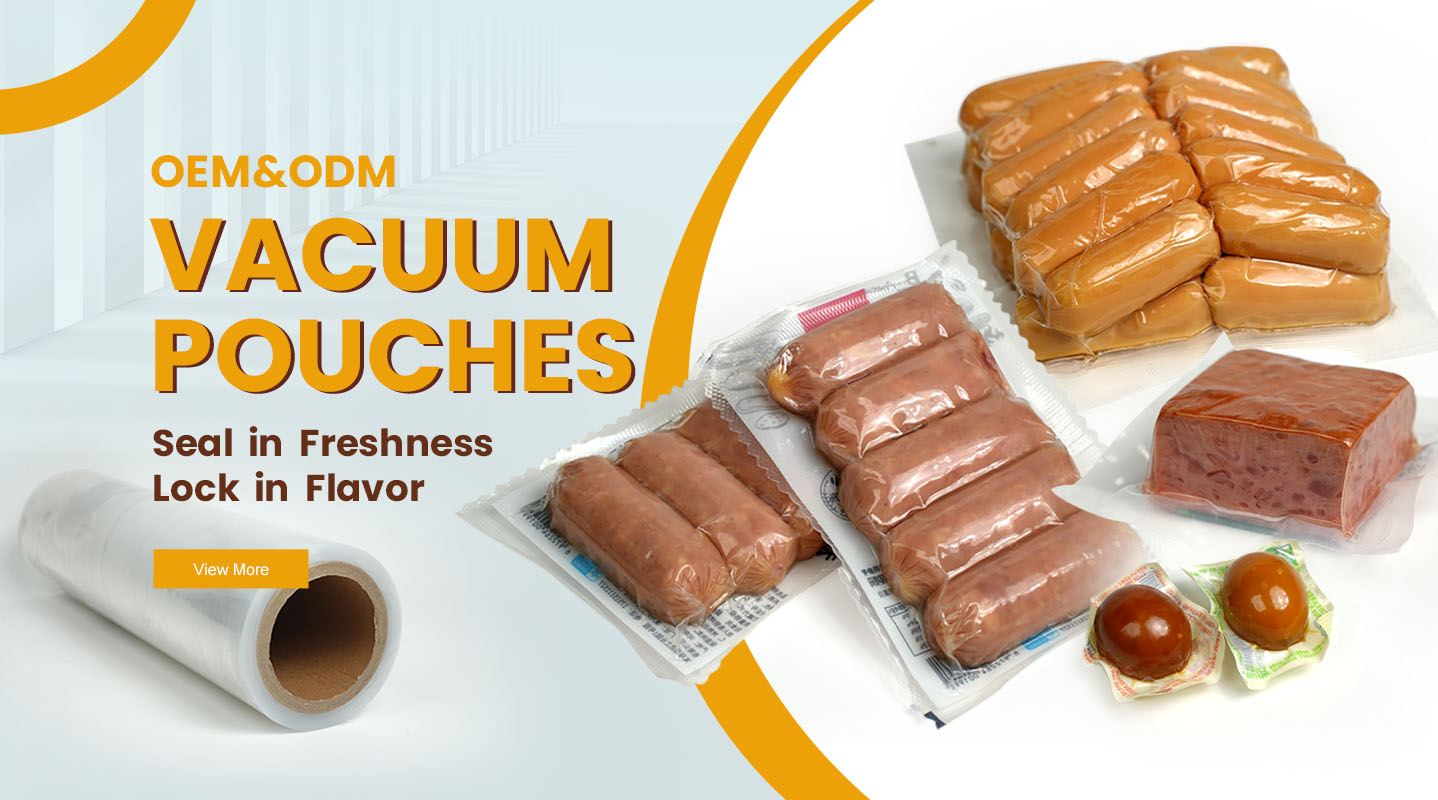
Color change in meat packaging is a common issue in chilled and frozen meat supply chains. It can happen during storage, transport, retail display, or after vacuum packaging. For meat processors, understanding the causes helps reduce complaints, improve shelf appearance, and choose the right meat vacuum packaging solution.
Meat color is highly related to oxygen contact. When oxygen level is not controlled properly, meat may turn brown, dark red, or gray. Poor barrier film, weak sealing, pinholes, or air leakage can allow oxygen to enter the package.
Using meat color protection film with proper oxygen barrier performance helps slow oxidation and maintain a stable product appearance.
If the vacuum level is unstable, residual air may remain inside the pack. This can cause uneven color areas, especially in beef and pork packaging. Vacuum machines, sealing temperature, film thickness, and pouch size all affect the final vacuum result.
Cold chain instability can also lead to color change. Repeated thawing and refreezing may damage meat texture and accelerate moisture loss. Film used for frozen meat should remain flexible under low temperatures and maintain sealing strength after storage.
Strong display lighting can affect meat color over time. Transparent packaging improves visibility, but the film also needs suitable barrier and thickness design to reduce quality loss during shelf display.
Different meat products require different packaging structures. Bone-in meat needs puncture-resistant film, while fresh chilled meat may require high oxygen barrier film. A reliable meat packaging factory should recommend film based on meat type, storage time, packaging machine, and distribution method.
To reduce color change, processors should check oxygen transmission rate, sealing strength, vacuum performance, film thickness, storage temperature, and packaging line stability. Good packaging cannot replace cold chain control, but it can greatly reduce oxidation and appearance problems.