Shelf life is not controlled by packaging alone, but the right packaging film often becomes the difference between a product that stays stable through storage and distribution and one that loses color, texture, aroma, or safety margin too early. Food deterioration is mainly driven by oxygen, moisture movement, microbial activity, seal failure, light exposure, and temperature abuse. FAO notes that shelf life depends on the food itself, the storage environment, and the barrier properties of the package, while packaging also plays an important role in reducing food loss by keeping food fresh longer.
For manufacturers, this means shelf life extension starts with a matching process. The material structure must fit the product, the sealing layer must fit the filling and packing line, and the final pack must survive logistics without pinholes or seal leaks. A strong film with poor barrier balance will not perform well, and a high barrier structure with unstable sealing will also fail in real distribution. FDA guidance also stresses that the ultimate proof of packaging suitability comes from full shelf life stability studies, not only from material claims.
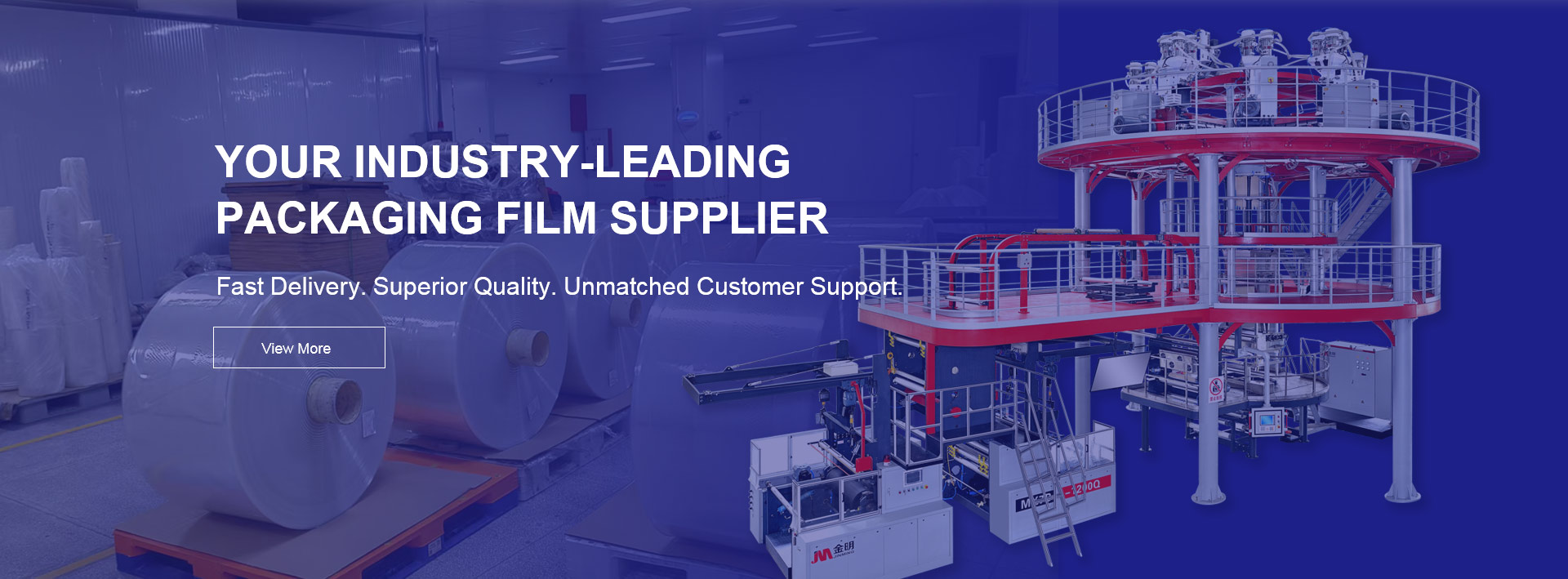
JINBORUN is positioned well for this work because the company focuses on co-extrusion barrier food film and vacuum bags, offers food Forming Film, barrier forming film, Vacuum Pouch, and Printing And Laminated Film, and states that it has been operating since 2016 with more than 150 employees in Jiangmen, Guangdong. Its product range also covers meat, seafood, frozen food, egg products, and customized pouch formats, which gives buyers a broader base for tailored food packaging solutions rather than a one-size-fits-all supply model.
The most effective way to extend shelf life food packaging is to select a film structure that blocks the main threat for that product category. Oxygen-sensitive foods need strong oxygen control to slow oxidation, rancidity, color fading, and growth of many spoilage organisms. Moisture-sensitive foods need low water vapor transmission so crispness, texture, and powder flowability stay stable. Recent packaging research also confirms that shelf life is closely linked to oxygen transmission rate and water vapor transmission rate because these two values strongly affect oxidation, moisture gain or loss, and microbial stability.
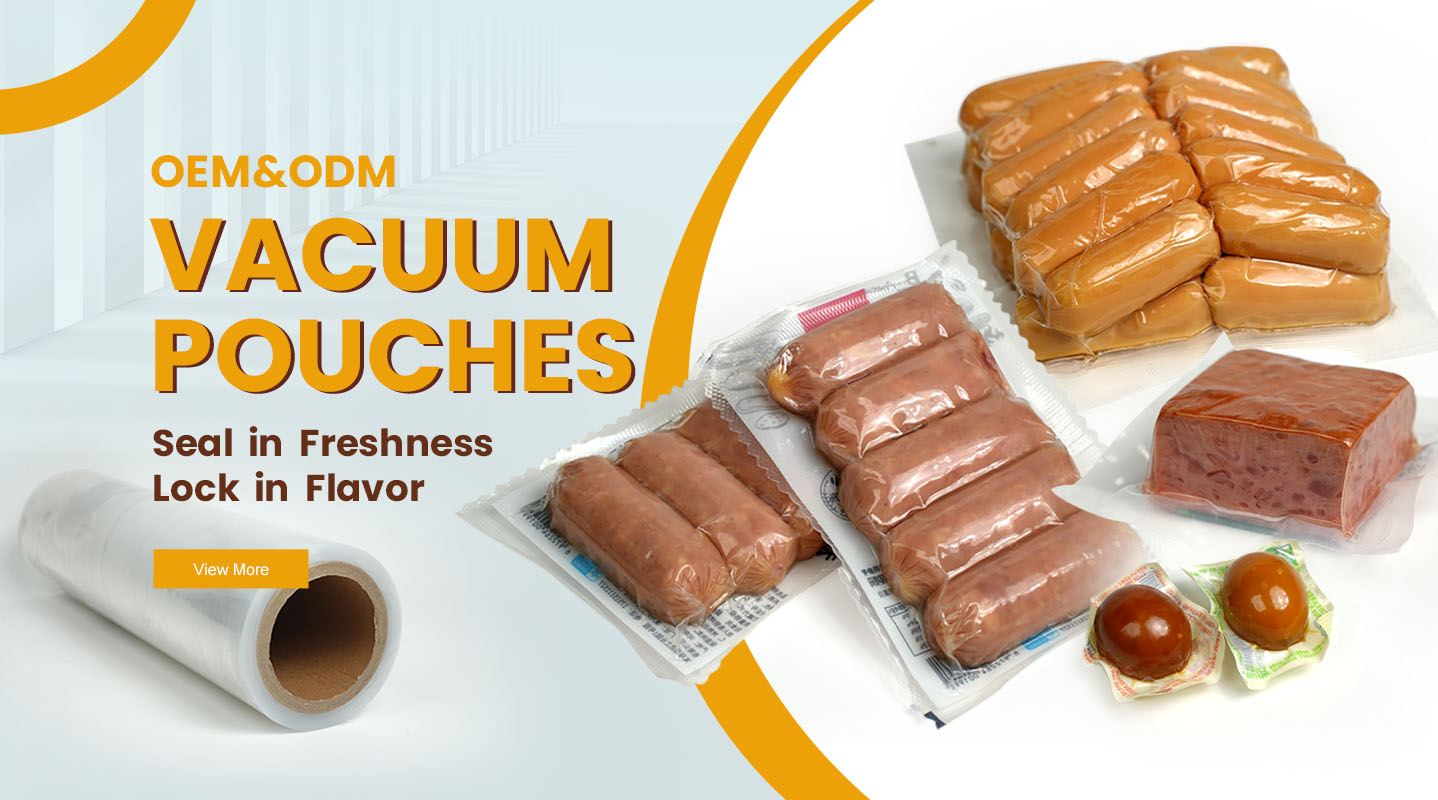
This is why multi-layer structures are so widely used in modern barrier packaging. Different layers can contribute sealability, puncture resistance, printability, thermoformability, stiffness, or oxygen barrier performance in the same pack. JINBORUN specifically describes its vacuum pouches and roll films as multi-layer structures made through advanced co-extrusion or laminated constructions, designed to balance barrier performance with mechanical strength and airtight sealing. That kind of structural flexibility is important for frozen meat, seafood, snack foods, and processed protein products that do not fail in the same way during storage.
Even a high-grade packaging film for long shelf life will underperform if the seal is weak. Seal integrity is where theory meets production reality. A good seal prevents oxygen re-entry, moisture exchange, and contamination after filling. A poor seal can create a slow leak that is not obvious on day one but shortens shelf life dramatically during transport, warehouse handling, or retail display. FDA packaging guidance emphasizes that material selection and packaging process suitability must both be verified because performance depends on the whole system, not just the resin structure.
For vacuum applications, sealing becomes even more important because the package is designed to reduce oxygen below normal atmospheric levels. Minnesota food safety guidance explains that reduced oxygen packaging is intended to extend shelf life by preventing the growth of most spoilage organisms, while refrigerated vacuum packaged foods should be kept at 41 degrees Fahrenheit or below. FDA also warns that vacuum packed or oxygen-reduced foods can still appear acceptable after temperature abuse, which means barrier performance must be paired with correct process control and cold chain management.
Many buyers use vacuum packaging and barrier packaging as if they mean the same thing, but they solve different parts of the problem. Vacuum removes air from the pack. Barrier controls how much gas and moisture can move back through the film over time. For shelf life extension, both are often needed together. A vacuum pack made with low barrier film may lose performance during storage. A high barrier film without proper evacuation or sealing may also leave too much residual oxygen inside the pack.
This is especially relevant for meat and protein products. USDA storage guidance shows that unopened vacuum-packed dinners with USDA seal can hold for about 2 weeks under refrigeration, and USDA material on freezing notes that high oxygen barrier vacuum packaging can preserve fresh beef and pork quality for much longer in frozen conditions than more oxygen-permeable formats. The practical message is simple: shelf life gains are real, but they depend on the combined effect of product type, temperature, oxygen control, and seal integrity.
Below is a simple framework for matching film performance to product risk:
| Product type | Main spoilage risk | Film priority | Packaging focus |
|---|---|---|---|
| Fresh meat | Oxygen exposure, purge, seal failure | High oxygen barrier, puncture resistance | Vacuum packaging with reliable seals |
| Frozen seafood | Freezer burn, oxidation, low-temperature cracking | Barrier and cold resistance | Tough multilayer film with stable seal |
| Processed snacks | Moisture uptake, aroma loss | Moisture barrier and printability | Laminated film with stable seal window |
| Egg products | Oxygen sensitivity, contamination risk | Barrier and hygiene consistency | Form-fill-seal compatible structure |
| Sauces or prepared foods | Seal contamination, migration, puncture | Seal strength and structure balance | Customized film design for filling process |
This kind of fit-for-purpose approach is consistent with JINBORUN’s product portfolio, which includes packaging films for pork, beef, fish, frozen food, seafood, spicy snacks, and egg products, plus thermoforming and Customized Vacuum Pouch options.
A shelf life project should never stop at sample approval based on appearance alone. The more reliable route is to validate the film under actual production and storage conditions. That includes seal window stability, leak testing, transport resistance, puncture resistance for sharp products, residual oxygen targets after packing, and storage trials at the intended temperature. FDA guidance is clear that the packaging process and the closure system must be proven suitable for intended use through stability work.
For this reason, a supplier with converting flexibility and category experience is more useful than a supplier that only offers a generic rollstock catalog. JINBORUN highlights customized vacuum pouches, printable laminated films, multiple pouch shapes, and multi-layer structures intended for airtight sealing. For procurement teams, this supports faster alignment between product category, machine compatibility, visual presentation, and target shelf life.
To extend shelf life successfully, three decisions matter most. First, choose the right material structure for the product’s oxygen and moisture sensitivity. Second, design a sealing system that remains stable on the production line and through distribution. Third, confirm performance through real shelf life validation rather than relying only on nominal barrier claims. FAO and FDA guidance both point to the same conclusion: shelf life is the result of food properties, package barrier, and process control working together.
For companies sourcing food packaging solutions, the value of a specialized partner is not just film supply. It is the ability to match co-extruded or laminated structures to actual storage goals, whether the requirement is packaging film for long shelf life, clean sealing for vacuum packaging, or stronger barrier packaging for sensitive food categories. JINBORUN’s focus on co-extrusion barrier films, vacuum bags, forming films, and customized applications makes it a practical manufacturing partner for shelf life driven packaging programs.
Previous: Why Does Vacuum Packaging Leak?