High-moisture foods such as fresh meat, seafood, marinated products, ready-to-cook meals, and many refrigerated items create a tough packaging environment. Water inside the pack drives condensation, softens some structures, and accelerates quality loss when oxygen ingress is not controlled. The best high moisture Food Packaging Film is the one that matches your product’s moisture load, oxygen sensitivity, sealing method, and distribution conditions, then locks those variables with repeatable production quality.
From a manufacturer perspective, selection should start with measurable barrier targets, not just a material name. Water vapor barrier is typically expressed as WVTR or MVTR, commonly tested at 37.8°C and 90% RH in many industry specifications.
When the film is mismatched, problems appear fast:
Moisture exchange leads to purge, drip, label failure, and carton weakening. WVTR becomes a decision driver for moisture resistant packaging film roll designs.
Oxygen ingress causes discoloration in meat, rancidity in fat-rich foods, and flavor loss in seasoned products, so low OTR becomes critical for many vacuum and barrier applications.
Seal failure shows up as microleaks after cold-chain vibration or temperature cycling, especially on wet or oily seal areas. Film structure and sealant layer choice matter as much as thickness.
There is no single universal WVTR number that fits every wet product, but it helps to anchor expectations with real ranges.
A 2023 technical report notes that the food packaging industry necessitates WVTR around 0.1 to 1 g per m2 per day for moisture-barrier performance in many contexts. At the same time, single-layer commodity films can be far above or below this range depending on resin and orientation, which is why multi-layer structures are often used.
| Film type, normalized at 38°C and 90% RH | WVTR range g per m2 per day |
|---|---|
| Biaxially oriented OPP | 3.9 to 6.2 |
| HDPE | 4.7 to 7.8 |
| Cast PP | 9.3 to 11 |
| Biaxially oriented PET | 16 to 20 |
| LDPE | 16 to 23 |
These values illustrate why high-moisture applications often rely on co-extruded barrier film for high moisture foods rather than a single web.
For many wet and oxygen-sensitive foods, a multilayer structure is the practical sweet spot: toughness, stable sealing, and controlled OTR and WVTR. Oxygen-barrier layers can be extremely effective, but some barrier materials lose performance at high humidity, so they must be protected by outer layers that limit moisture exposure.
This is where consistent multilayer processing and layer design discipline matter more than marketing terms.
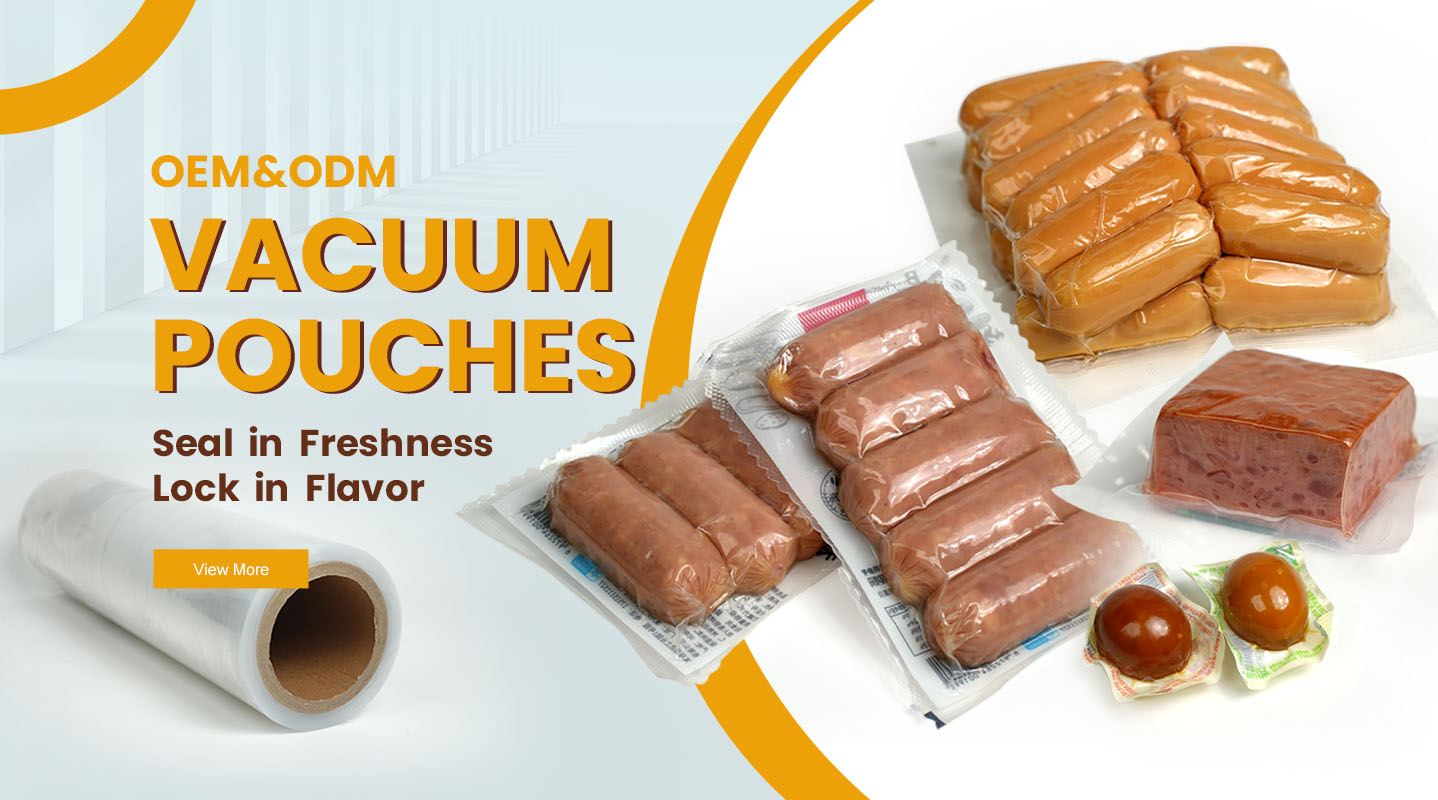
For wet proteins, vacuum packaging reduces headspace oxygen, but the film must then hold that low-oxygen state with dependable barrier and seals. OTR guidance is commonly used to compare film oxygen barrier capability across materials and structures. In practice, buyers should request target OTR and WVTR values, puncture resistance expectations, and seal strength windows under real line settings.
Thermoforming formats add forming stress and corner thinning, so the best fit is usually a structure designed for forming stability and puncture resistance while maintaining barrier after forming. For wet foods with sharp edges or bone fragments, puncture resistance is not optional.
Use this checklist to narrow down the best packaging film for high-moisture foods without overcomplicating the spec.
Define the moisture scenario Identify whether the pack contains free water, purge, sauce, or high humidity headspace. Set a WVTR target aligned to shelf life expectations.
Define oxygen sensitivity and appearance needs For meat color stability, fat oxidation control, and flavor retention, define an OTR target and validate it against your process and storage temperatures.
Match sealing method to sealant layer Hot bar, impulse, continuous band sealing, or tray lidding each needs a different seal initiation behavior. Add real-world tests on wet seal contamination and cold-chain cycling.
Confirm food-contact compliance requirements for export markets Many buyers align to FDA indirect food additive polymer rules under 21 CFR Part 177 for US distribution, and EU plastics food contact rules under EU Regulation 10/2011, including an overall migration limit of 10 mg per dm2.
Require production repeatability, not only lab numbers Ask for process capability around thickness, barrier consistency, seal strength distribution, and print lamination stability when applicable.
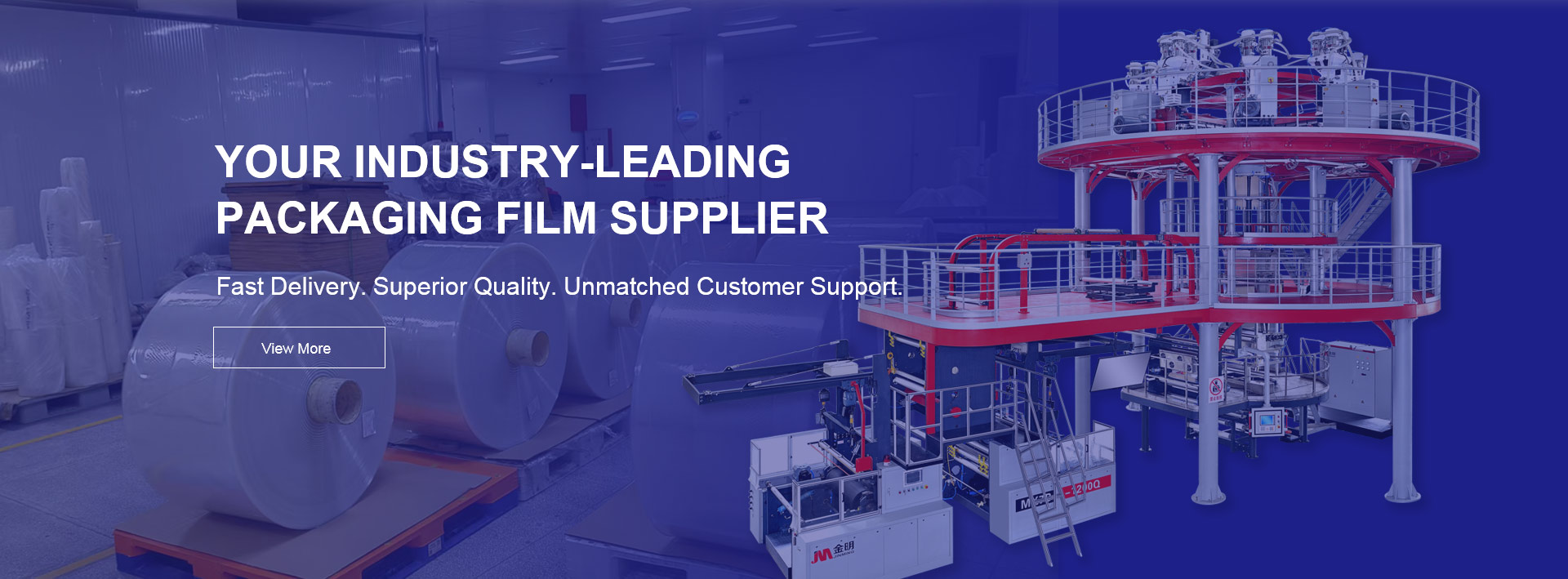
JINBORUN focuses on co-extrusion barrier food film and vacuum bags, covering food Forming Film, barrier forming film, Vacuum Pouch, and Printing And Laminated Film for applications including meat and seafood. The company states it operates an independent production workshop and product development team, with automated production and the ability to design packaging solutions based on actual requirements, supported by multilayer blown film equipment and multiple production lines.
That combination matters for wet foods, because performance depends on how reliably the structure is produced and converted, not just what the structure is called.
The best packaging film for high-moisture foods is typically a multilayer structure that balances low WVTR, controlled OTR, strong seals on wet interfaces, and durability through cold-chain handling. Start with barrier targets, then validate the film under your exact filling, sealing, and storage conditions. Share your product type, storage temperature range, target shelf life, and packing method with JINBORUN, and we will propose an optimized structure, recommended barrier targets, and a verification plan for stable mass production