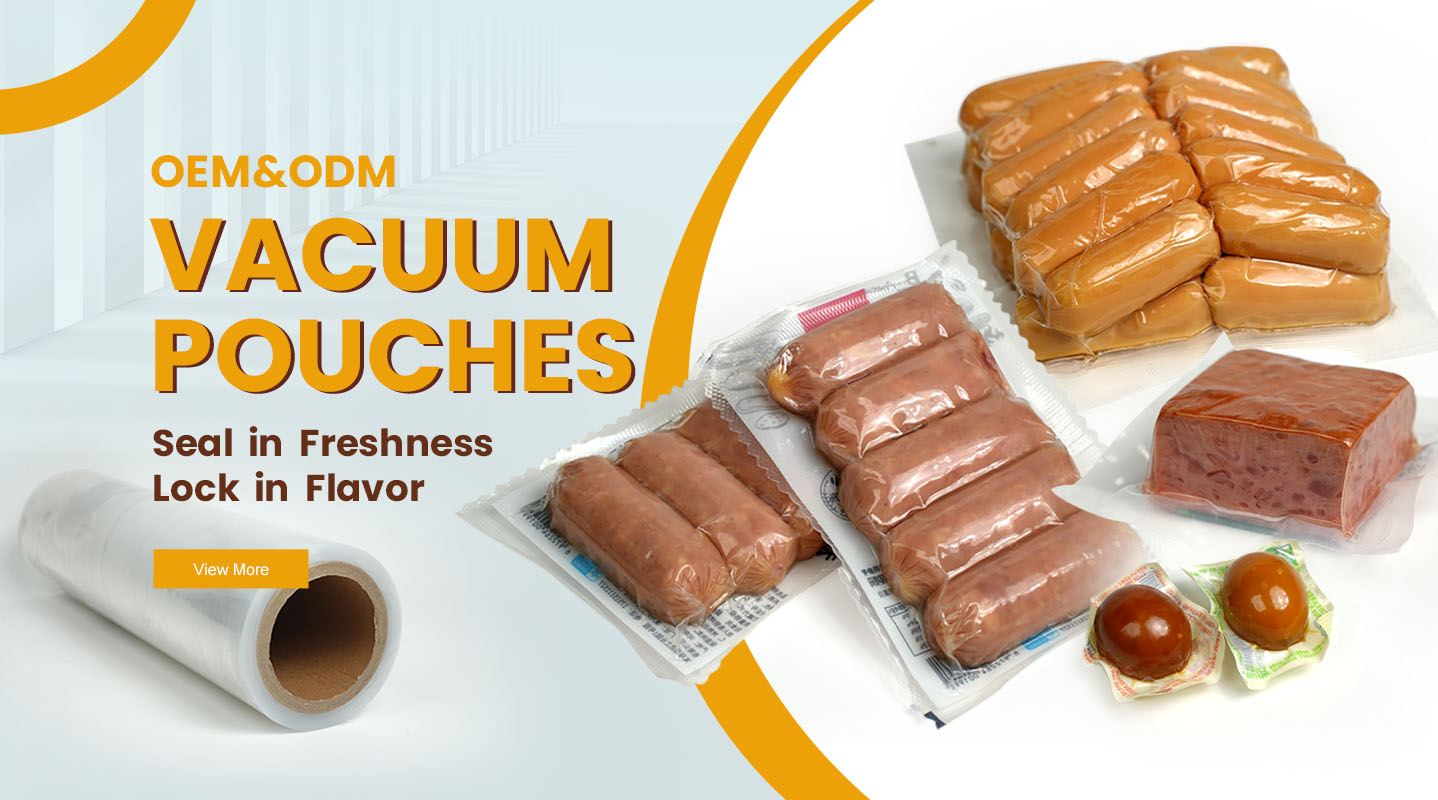
Seafood is highly perishable and sensitive to oxygen, moisture, and temperature changes. Choosing the appropriate packaging film is essential to preserve freshness, extend shelf life, protect delicate textures, and enhance visual appeal for retail display or transport. packaging films used in the seafood industry are engineered with specific barrier properties, mechanical strength, and processing compatibility to meet these needs.
Vacuum skin packaging films are designed to conform tightly to the shape of seafood, creating a “second skin” that dramatically reduces air exposure and movement inside the pack. These films are exceptionally useful for sliced fish, fillets, and shell-on products.
Characteristics
High oxygen and moisture barrier
Excellent elasticity to wrap irregular shapes
Superior transparency for product display
Strong seal strength for secure, leak-free packs
Applications
Premium fresh fish fillets
Lobster, shrimp, or crab on tray
Delicate seafood portions
Thermoforming films are used in automated systems that heat and form the bottom web into a tray or pocket, then fill and seal it with a top web film. This method is popular for fresh and modified atmosphere packaging (MAP).
Types
Medium Barrier Thermoforming Films — Balanced barrier and flexibility for high-volume chilled seafood.
High Barrier Thermoforming Films — Include strong EVOH or PA layers for extended shelf life.
Materials Often Used
Polyamide (PA)
Ethylene Vinyl Alcohol (EVOH)
Polyethylene (PE)
PET and PP may be included in multilayer structures for stiffness and clarity.
Applications
Chilled packed fish and shellfish
MAP trays for salmon, tilapia, or cod
Frozen seafood trays requiring deep draw forming
Vacuum shrink bags are engineered to contract tightly around seafood when heat is applied, creating a secure, leak-resistant barrier. These bags are particularly common for frozen and long-term storage packaging.
Advantages
High transparency and gloss
Excellent moisture and oxygen barrier
Strong mechanical and puncture resistance
Compatible with deep freezing and transport
Typical Uses
Frozen fillets and whole fish
Shrimp, squid, and crab
Seafood requiring freezer stability
Barrier laminated films combine multiple polymers to achieve enhanced protection against gases and moisture. These films are commonly used for tray sealing, flow packs, or laminated bags. (umaras.eu)
Common Structures
LDPE/LDPE
PET/LDPE
OPP/LDPE
Nylon/PE laminates
These constructions deliver a balance of clarity, sealability, and barrier performance for fresh and frozen seafood applications.
Flexible films used in horizontal or vertical form-fill-seal processes are often applied to seafood portions, marinated products, or smaller retail packs. These films typically prioritize ease of processing and product visibility.
Materials
Polyethylene (PE)
Polypropylene (PP)
Oriented films such as BOPP for improved strength and optics
These films enable continuous wrapping (flow packaging) and can be combined with barrier layers for improved shelf life.
Below is an overview of common polymers and materials engineered into seafood packaging films:
| Material | Main Contribution | Typical Use |
|---|---|---|
| PE (Polyethylene) | Good sealability, moisture resistance | Vacuum bags, shrink bags |
| PA (Polyamide/Nylon) | Puncture resistance, strength | Thermoforming bottom webs |
| EVOH (Ethylene Vinyl Alcohol) | High oxygen barrier | High-barrier thermoforming & VSP films |
| PET (Polyethylene Terephthalate) | Clarity, stiffness | Lidding layers, laminated films |
| PP (Polypropylene) | Heat resistance, optics | Top webs in trays, overwraps |
| Laminates (multi-layer) | Balanced barrier & strength | MAP trays, freeze packaging |
Oxygen Barrier: Limits oxidation and spoilage caused by air exposure.
Moisture Resistance: Prevents water loss and freezer burn in frozen products.
Seal Integrity: Ensures airtight closure under refrigerated and frozen conditions.
Puncture Resistance: Protects the film from ice crystals, sharp fins, or shell edges.
Transparency and Optics: Enhances visibility and marketing appeal on retail shelves.
Cold Chain Compatibility: Films must maintain flexibility and strength at low temperatures.
| Film Format | Application | Benefits |
|---|---|---|
| Vacuum Skin Films | Premium seafood retail packs | Tight fit, extended shelf life |
| Thermoforming Films | MAP / VSP trays | Custom-shaped containment |
| Vacuum Shrink Bags | Frozen seafood | Barrier performance, freezer stability |
| Barrier Laminated Films | Flow packs, tray seals | Balanced protection & seal strength |
| Overwrap Films | Fresh seafood display | Clarity and drip protection |
When selecting packaging films, consider:
Product type: Fresh, chilled, or frozen
Shelf-life objectives: Short-term fresh vs long-term frozen
Packaging method: Vacuum, MAP, thermoforming, shrink
Barrier requirements: Oxygen, moisture, aroma control
Processing equipment compatibility
Effective packaging film choice enhances product safety, reduces waste, and improves consumer appeal throughout distribution and retail presentation.