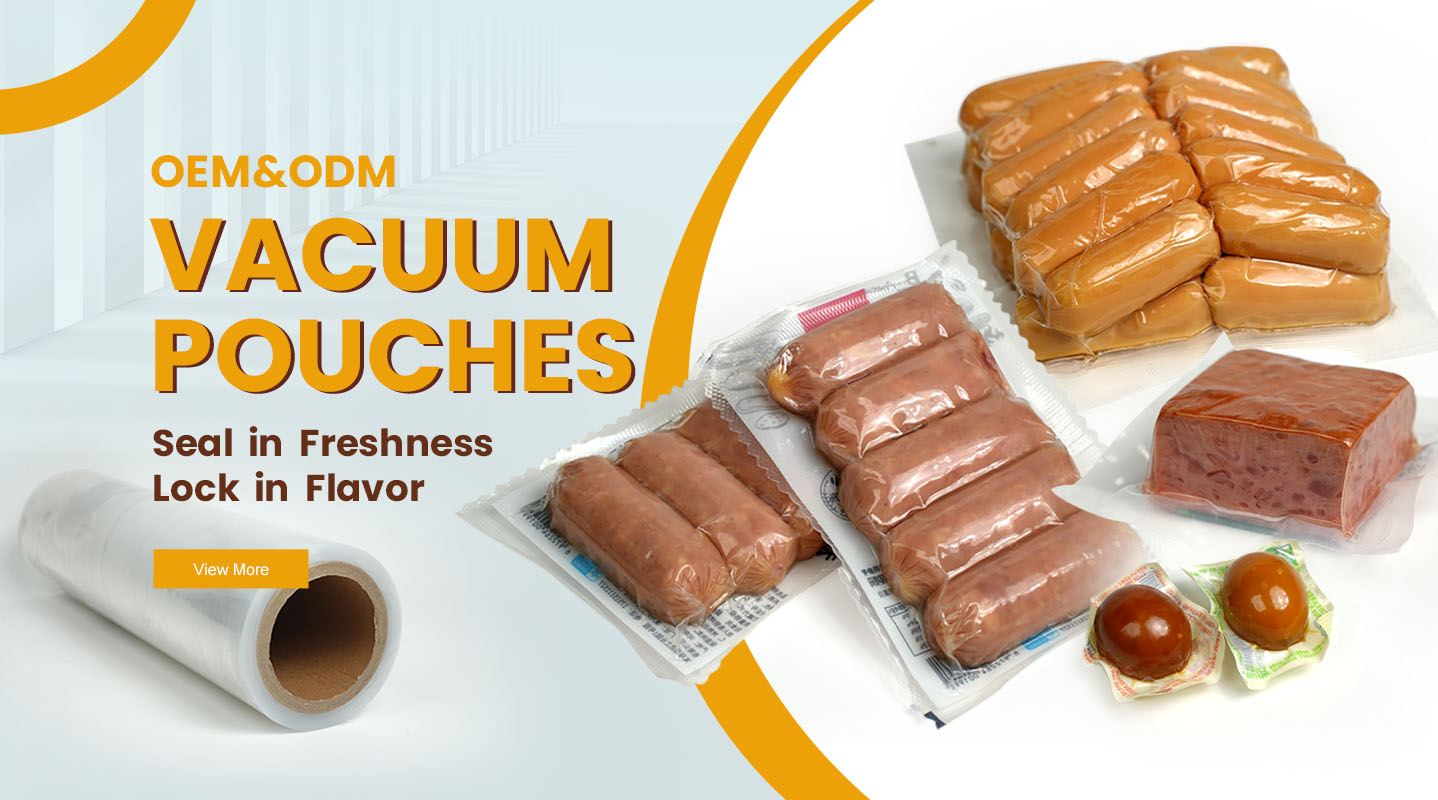
When selecting vacuum bags for frozen food, bag thickness is one of the most critical performance factors. The right gauge directly influences durability, barrier protection, puncture resistance, and shelf life in frozen storage. This article explains how to choose vacuum bag thickness for frozen foods, what properties different thickness levels offer, and how thickness interacts with packaging materials and end-use requirements.
Bag thickness refers to the combined total of all material layers measured in:
Mil (1 mil = 0.001 inch)
Microns (1 micron = 0.001 mm)
Higher thickness typically delivers:
Better puncture, cut, and abrasion resistance
Improved moisture and oxygen barrier
Greater structural strength during freezing and handling
However, excessive thickness can increase cost and reduce flexibility on sealing equipment. The goal is to balance durability with economy.
Below are general guidelines that manufacturers and packers use for vacuum bags intended for frozen storage:
| Product Type | Typical Thickness (Mil) | Typical Thickness (Microns) | Suitability |
|---|---|---|---|
| Light Meats & Poultry Parts | 3–4 mil | 75–100 µm | Small cuts and non-bone products |
| Medium Cuts & Marinated Foods | 4–6 mil | 100–150 µm | Steaks, chops, marinated portions |
| Bone-in Cuts & Large Packs | 6–8 mil | 150–200 µm | Ribs, hams, bone-in portions |
| Heavy/Sharp-Edge Foods | 8–10+ mil | 200+ µm | Seafood with shells, bone heavy cuts |
These ranges assume a multilayer vacuum bag made with high-barrier materials that include protective layers (such as nylon/PA, EVOH, or PET) and a strong sealant layer.
Frozen food often has ice crystals and sharp edges that press against bag walls. Thicker bags provide:
Stronger resistance to tears and punctures
Protection through freezing, storage, and transport
Thicker walls are especially important for bone-in cuts, seafood with shells, and products transported long distances.
vacuum packaging slows moisture loss, but the bag’s material and thickness further control:
Water vapor transmission rate (WVTR)
Protection against freezer burn
A thicker, properly constructed bag reduces moisture escape and improves appearance and texture after long storage.
Frozen foods are usually more stable, but residual oxygen can still cause:
Discoloration
Off-flavors
Lipid oxidation
High-barrier layers and adequate thickness reduce oxygen ingress, preserving quality longer.
Thickness alone does not guarantee performance. It must align with film construction:
| Component | Role | Impact |
|---|---|---|
| Outer Layer (PET/PP) | Structural strength and printability | Improves dimensional stability and protects barrier |
| Barrier Layer (EVOH/PVDC) | Controls oxygen and moisture ingress | Essential for frozen shelf life |
| Puncture Layer (PA/Nylon) | Resists sharp edges | Enhances tear resistance |
| Sealant Layer (PE) | Provides airtight seal | Ensures strong, reliable seals |
A thicker bag with poor barrier material may still underperform a slightly thinner bag engineered with superior barrier and puncture-resistant materials.
Examples: Boneless chicken breasts, diced meat
Recommended: 3–4 mil (75–100 µm)
Reason: Sufficient for smooth surfaces with less risk of puncture; lighter gauge reduces cost and machine wear.
Examples: Pork chops, marinated cubes
Recommended: 4–6 mil (100–150 µm)
Reason: Increased thickness handles marinade liquids and some handling abuse.
Examples: Ribs, hams, bone-in roasts
Recommended: 6–8+ mil (150–200+ µm)
Reason: Bone edges and size demand extra strength and barrier reliability in freezing and transport.
Examples: Lobster shells, fish with sharp fins
Recommended: 8–10+ mil (200+ µm)
Reason: Maximum puncture resistance to protect barrier integrity in cold conditions.
Bag thickness must be compatible with vacuum packaging machines:
Sealer strength: Stronger jaws handle thicker films.
Heat control: Adequate heat must penetrate multiple layers.
Machine settings: Temperature, dwell time, and pressure must match bag gauge.
If thickness is too high for the equipment, seals may fail, causing leaks and product spoilage.
Frozen storage limits microbial growth, but quality degradation still occurs. Thicker, high-barrier bags help:
Maintain moisture levels
Reduce oxidation
Preserve texture and color
For long-term storage (6+ months), higher thickness with robust barrier layers is advisable.
Thicker bags cost more, but underestimating thickness leads to:
Leakers and rework
Product waste
Lower shelf appearance
Customer complaints
The cost of a few extra mils often outweighs the cost of product loss.
Match thickness to product type: Lean, smooth products use thinner bags; sharp, dense products require thicker ones.
Choose materials that balance barrier and strength: Thickness matters, but material construction is equally important.
Verify machine compatibility: Confirm vacuum packaging equipment supports the chosen gauge.
Aim for optimized barrier performance: Controlled oxygen and moisture transmission extend frozen quality.
Consider storage duration and distribution conditions: Longer, harsher cold chains need thicker, high-barrier solutions.
| Food Category | Suggested Bag Thickness | Key Benefit |
|---|---|---|
| Boneless meats | 3–4 mil / 75–100 µm | Lightweight, cost-effective protection |
| Marinated items | 4–6 mil / 100–150 µm | Handles liquid and handling stress |
| Bone-in portions | 6–8 mil / 150–200 µm | Puncture and tear resistance |
| Shellfish and sharp edges | 8–10+ mil / 200+ µm | Maximum durability |
Choosing the right thickness for frozen food vacuum bags ensures effective protection against punctures, moisture loss, and oxidation. By aligning bag gauge with material construction and product demands, you improve frozen quality, reduce spoilage, enhance consumer satisfaction, and optimize packaging efficiency.