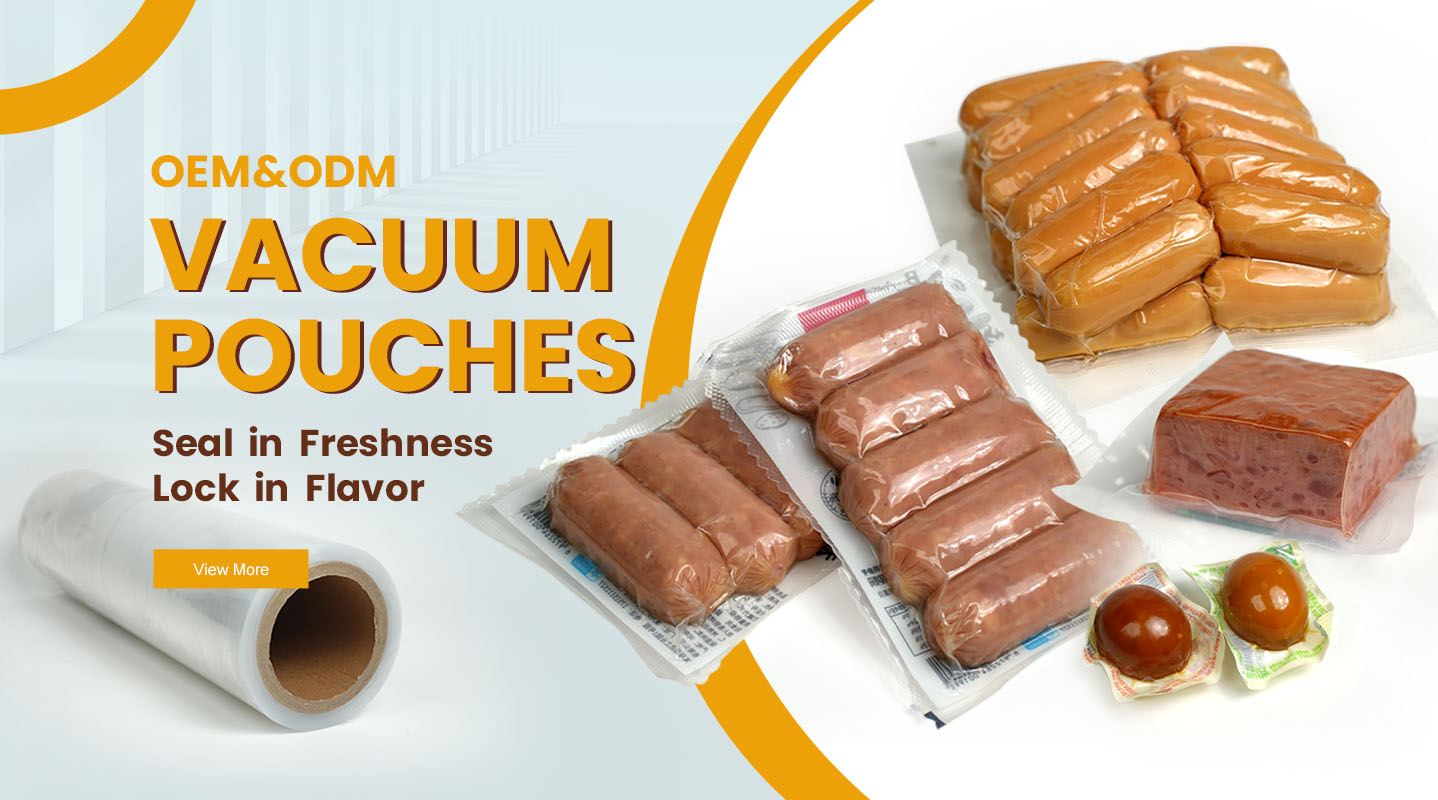
Barrier film is a multilayer plastic or paper–plastic laminate engineered to slow or block the transmission of gases, water vapor, aromas, oils, and light that can degrade food. By controlling the movement of oxygen, moisture, and other small molecules, barrier films preserve flavor, color, texture, and nutrition—directly extending shelf life and protecting product safety from the factory line to the consumer’s kitchen.
Below is a practical guide to how barrier films work, key material choices, performance metrics you should check, and how to select the right structure for your products.
Oxygen control Oxygen accelerates lipid oxidation and microbial growth. Films with low OTR (oxygen transmission rate) keep snacks crunchy, coffee fresh, and ready-to-eat meals safer for longer.
Moisture management High WVTR (water vapor transmission) lets moisture move. The right film prevents crackers from going soft and keeps baked goods from drying out.
Aroma and flavor retention Aromatic molecules can migrate out of a package or be contaminated by external odors. Aroma barriers protect roasted, spiced, and flavored products.
Light shielding UV and visible light can fade colors and degrade vitamins and fats. Metallized or pigmented layers restrict light exposure.
Grease, oil, and solvent resistance Fatty and acidic foods need films that resist swelling or softening to avoid seal failure and label bleed.
Mechanical and sealing performance Stiffness, puncture resistance, hot-tack, and seal strength ensure packages run fast, stay closed, and survive logistics.
EVOH (Ethylene Vinyl Alcohol): Premium oxygen barrier in dry conditions; typically coextruded between polyolefins to protect from humidity.
PVDC (Polyvinylidene Chloride): Strong all-around barrier to O₂ and H₂O; used selectively due to sustainability and regulatory preferences in some regions.
PA/Nylon (Polyamide): Toughness and puncture resistance; moderate oxygen barrier; often paired with PE or EVOH.
PET (Polyester): Dimensional stability, printability, moderate O₂ barrier; often metallized (VMPET) for high light/oxygen barrier.
OPP/BOPP (Oriented Polypropylene): Good moisture barrier, clarity, machinability; metallized versions offer enhanced barrier.
PE (Polyethylene, incl. LLDPE/HDPE): Sealant and moisture barrier; foundation for mono-material structures targeting recyclability.
Aluminum Foil: Near-absolute barrier to gas/light; used where maximum protection is essential.
Coatings (e.g., AlOx/SiOx, acrylic, PVDC, water-based barriers): Thin functional layers to add barrier without metal look or to enable recyclability.
Use these numbers to compare options and set acceptance criteria. Values vary by grade, thickness, and test method—treat ranges below as directional.
| Property | What It Means | Typical Targets (Food) | Notes |
|---|---|---|---|
| OTR (cc/m²·day, 23 °C, 0%/65% RH) | Oxygen ingress rate | Coffee, nuts: <1; Meats: <5; Bakery: <50 | EVOH and metallized films excel; humidity impacts EVOH. |
| WVTR (g/m²·day, 38 °C, 90% RH) | Moisture ingress rate | Crisps/snacks: <1; Dry mixes: <2 | OPP and PE good for moisture; metallization further reduces. |
| Light Transmission (%) | UV/visible blocking | Light-sensitive oils: ≤1–5 | Metallized or pigmented layers for light-sensitive foods. |
| Seal Strength (N/15 mm) | Closure integrity | Flow-wraps: 3–7; Pouches: 6–12 | Check hot-tack window for line speed. |
| Puncture (J or gf) | Abuse resistance | Frozen, bone-in: higher is better | Nylon layers increase toughness. |
Snacks & nuts: Reducing OTR below ~1 cc/m²·day maintains crunch and slows rancidity; low WVTR prevents sogginess.
Coffee & tea: Degassing valves plus high oxygen barriers preserve aroma compounds and prevent staling.
Dairy & cheese: Oxygen and light barriers reduce off-flavors and pigment degradation; controlled moisture maintains texture.
Processed meats: Lower oxygen reduces microbial growth and color change; strong seals support MAP or vacuum packs.
Ready meals: Barrier to oxygen, moisture, and light—as well as retort/boil-in-bag compatibility—stabilizes quality through heat processes.
Dry snacks: OPP // Metallized OPP or VMPET // PE
Coffee: PET (printed) // Aluminum foil or VMPET // PE with valve area
Frozen foods: PET or OPA // PE (thicker) for puncture and cold-seal performance
Retort pouches: PET // Aluminum foil // CPP or RCPP
High-barrier mono-PE (recyclability-oriented): PE // EVOH-PE // PE (tie layers included)
“//” indicates lamination; tie/adhesion layers may be present.
Transmission testing: OTR and WVTR to standardized methods; verify at application humidity.
Aging & migration: Accelerated shelf studies for flavor retention and off-odor prevention.
Seal integrity: Hot-tack curves, peel strength, burst and leak tests under real line settings.
Mechanical durability: Drop, puncture, and flex crack resistance across the logistics chain.
Regulatory safety: Food-contact compliance, NIAS evaluation where relevant, and up-to-date declarations for target markets.
| Product Type | Main Risks | Useful Layers | Notes |
|---|---|---|---|
| Crisps, crackers | Moisture, oxygen | OPP + metallized OPP/VM layers + PE | Aim for very low WVTR; tight seals for bulk packs. |
| Roasted nuts | Oxygen, light | PET/OPP + VMPET or foil + PE | Keep OTR ~≤1; add light barrier. |
| Coffee beans/ground | Oxygen, aroma loss | PET + foil/VMPET + PE + valve | High O₂ barrier + aroma retention. |
| Cheese | Oxygen, light, moisture | PA/PET + VMPET + PE | Balance moisture for texture; map gas if needed. |
| Processed meat | Oxygen, microbial growth | PA + EVOH + PE | Toughness + oxygen barrier; consider thermoform. |
| Frozen entrées | Puncture, sealing in cold | PET/PA + PE | Low-temp seal performance matters. |
| Sauces/retort | Oxygen, heat, light | PET + foil + CPP/RCPP | Retort-safe laminations with robust seals. |
Source reduction: Thinner gauges and optimized structures reduce total plastic.
Mono-material designs: PE-based or PP-based laminates improve compatibility with existing recycling streams in many markets.
Coating alternatives to metal/foil: AlOx/SiOx coatings can deliver high barrier while keeping transparency and aiding recycling.
Ink/adhesive choices: Low-VOC systems and wash-off inks support cleaner recycling and regulatory compliance.
End-of-life claims: Align recyclability statements with local infrastructure; avoid over-promising and ensure third-party validation where possible.
Printability: PET and BOPP faces yield crisp graphics; surface energy and primer/anchor coats matter for ink holdout.
Sealing window: Validate hot-tack and seal strength across your line speeds and jaw temperatures to avoid leakers.
Form-fill-seal (FFS): Stiffness and COF (coefficient of friction) should match forming geometry; anti-blocking and slip levels impact speed.
Pouching: For stand-up pouches, combine stiffness (PET) with sealant strength (PE/CPP) and gusset puncture resistance (PA if needed).
Keep films in controlled humidity and temperature to maintain barrier stability, especially for EVOH-containing structures.
Allow rolls to acclimate before production to stabilize COF and curl.
Use first-in, first-out inventory to avoid aged adhesive variability and minimize curl or telescoping risks.
Choosing barrier by “rule of thumb” only: Always test with your product’s water activity, fat content, and target shelf life.
Ignoring humidity effects: EVOH loses barrier at high RH; compensate with protective layers.
Over-specifying foil: Excellent barrier, but can crack under flex or be overkill; evaluate metallized PET or AlOx as alternatives.
Under-specifying seals: Many failures trace to seal design—confirm jaws, dwell, and contamination tolerance with actual product.
Neglecting recyclability early: Locking in mixed laminates can limit design agility later; explore mono-material options first.
If you need application-specific guidance, high-barrier laminations, or recyclable structures tailored to your line speeds and shelf-life targets, consider JINBORUN. From structure design and prototyping to OTR/WVTR validation and graphics, they can help align protection, cost, and sustainability for export markets.
What’s the difference between moisture and oxygen barrier needs? Dry, crispy foods demand very low WVTR; high-fat or aroma-rich foods require very low OTR. Many products need both, plus light barrier.
Is metallized film the same as foil? No. Metallized PET/OPP uses a thin vacuum-deposited metal layer; it improves barrier significantly with lower weight and more flexibility than foil, but typically not as absolute as aluminum foil.
Can barrier films be recyclable? Yes. Mono-PE or mono-PP laminates, sometimes with advanced coatings or thin EVOH layers, are designed to be compatible with many recycling streams. Verify against local guidelines.
How do I set barrier targets? Start with product chemistry and desired shelf life, then run OTR/WVTR trials at relevant humidity and temperature, plus real-time or accelerated shelf studies.
What impacts aroma retention most? Low OTR helps, but aroma barrier is a separate property; select structures validated for aroma holdout and minimize headspace oxygen.
Define shelf-life goals and degradation risks first; let these drive barrier specs.
Match materials to risks: EVOH/metallized for oxygen and light, OPP/PE for moisture, PA for toughness.
Validate with lab and line tests, not just datasheets.
Plan sustainability and recyclability at the concept stage.
Work with a converter capable of tuning barrier, sealant, print, and machinability together—such as JINBORUN High-Barrier Films.