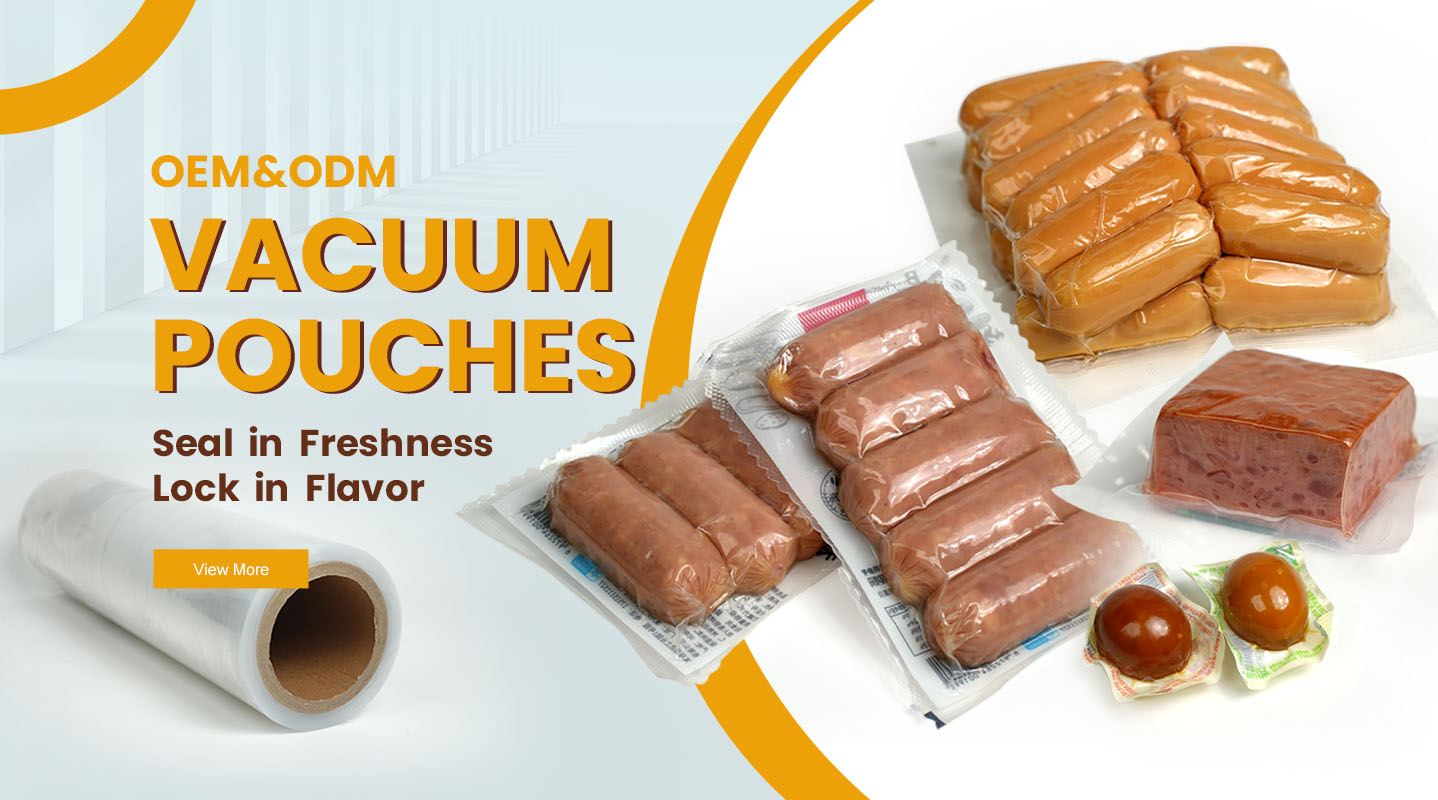
Printing on Vacuum Pouches is an essential step for product branding, identification, and compliance with packaging regulations. Whether for food preservation, medical use, or industrial parts packaging, clear and high-quality printing enhances product presentation and market competitiveness. This article explains the main printing techniques, materials, and key considerations for achieving professional results when printing on vacuum pouches.
Vacuum pouches are typically made from multi-layer laminated films designed to provide strong barrier properties and puncture resistance. Common materials include:
| Layer Type | Material | Function |
|---|---|---|
| Outer Layer | PET, PA (Nylon) | Provides printability and mechanical strength |
| Barrier Layer | EVOH, Aluminum Foil | Prevents oxygen and moisture penetration |
| Inner Layer | PE, CPP | Ensures strong heat sealing |
The outer layer must have excellent ink adhesion and heat resistance to withstand the printing process. Choosing the right material combination directly impacts the quality and durability of printed graphics.
Gravure printing is the most widely used method for high-quality vacuum pouch printing. It uses engraved cylinders to transfer ink onto the film surface.
Advantages: Excellent color consistency, fine detail, and suitable for long production runs.
Ink Type: Solvent-based inks are typically used due to their strong adhesion to plastic films.
Application: Ideal for food and pet food packaging that requires vivid branding.
Flexographic printing uses flexible relief plates and fast-drying inks to print directly on film rolls.
Advantages: Cost-effective for medium to large production volumes.
Features: Uses water-based or UV-curable inks, making it more environmentally friendly.
Result: Produces clear, smooth graphics with less ink waste.
Digital printing offers a flexible solution for small batches or customized packaging designs.
Advantages: No need for plates or cylinders; allows for variable data printing.
Limitations: Higher cost per unit compared to traditional methods.
Best For: Short-run production, promotional items, or private label packaging.
Screen printing involves pushing ink through a mesh stencil onto the surface of the pouch.
Advantages: Ideal for small areas, simple logos, or spot colors.
Use Case: Often applied after pouch forming for adding date codes, logos, or QR codes.
Before printing, proper surface treatment ensures the best ink adhesion and clarity:
Corona Treatment: Increases surface energy for better ink bonding.
Surface Cleaning: Removes oils and dust from the film surface.
Ink Compatibility Testing: Prevents peeling or color fading during sealing and storage.
Temperature Resistance Check: Ensures that inks remain stable under vacuum sealing conditions.
The general process of printing on vacuum pouches involves several controlled stages:
Film Unwinding: Rolls of laminated film are loaded into the printing machine.
Printing and Drying: Ink is transferred through cylinders or plates, then dried under heat.
Lamination (Optional): A transparent protective layer is applied for glossy or matte finish.
Cutting and Bag Forming: Printed films are cut and heat-sealed into the final pouch shape.
Quality Inspection: Visual and color consistency checks ensure accurate branding results.
Effective design enhances visibility and compliance. When designing artwork for printing:
Bleed and Trim: Extend design 3–5 mm beyond the cutting line to avoid white edges.
Color Profiles: Use CMYK color mode and check density levels before mass printing.
Registration Marks: Ensure accurate alignment in multi-color printing.
Finish Selection: Choose between glossy, matte, or soft-touch laminations based on branding.
Functional Labeling: Include expiration date, barcode, and product information zones.
After production, quality control is crucial for long-term shelf appeal and protection. Common tests include:
| Test Type | Purpose |
|---|---|
| Adhesion Test | Ensures ink firmly bonds to film surface |
| Rub Resistance | Simulates handling and transportation wear |
| Heat Resistance | Checks stability during sealing and storage |
| Color Matching | Verifies consistency between batches |
Printed vacuum pouches are used in a wide range of markets:
food packaging: Coffee beans, meat, seafood, and dried fruits benefit from oxygen-barrier printing films.
Medical Supplies: Sterilized tools or medication pouches with printed labels for traceability.
Electronics: Anti-static vacuum bags with product identifiers and lot codes.
Industrial Parts: Heavy-duty vacuum pouches with clear branding and instructions.
Each application demands precise ink adhesion, visual appeal, and durable barrier properties.
For businesses seeking professional-quality printing on vacuum pouches, partnering with an experienced manufacturer ensures consistency and compliance.
JINBORUN, a trusted producer of flexible packaging materials, offers custom printing solutions for vacuum pouches, including multi-layer laminations, matte finishes, and food-grade inks. Their advanced equipment and strict quality control help brands achieve high-definition, durable packaging that stands out in competitive markets.
Printing on vacuum pouches combines material science, precise engineering, and creative design. From selecting the right film structure to choosing a suitable printing method, every step affects final quality and consumer perception. With expertise in packaging innovation, manufacturers like JINBORUN provide tailored printing solutions that elevate product branding and ensure long-term performance in various industries.