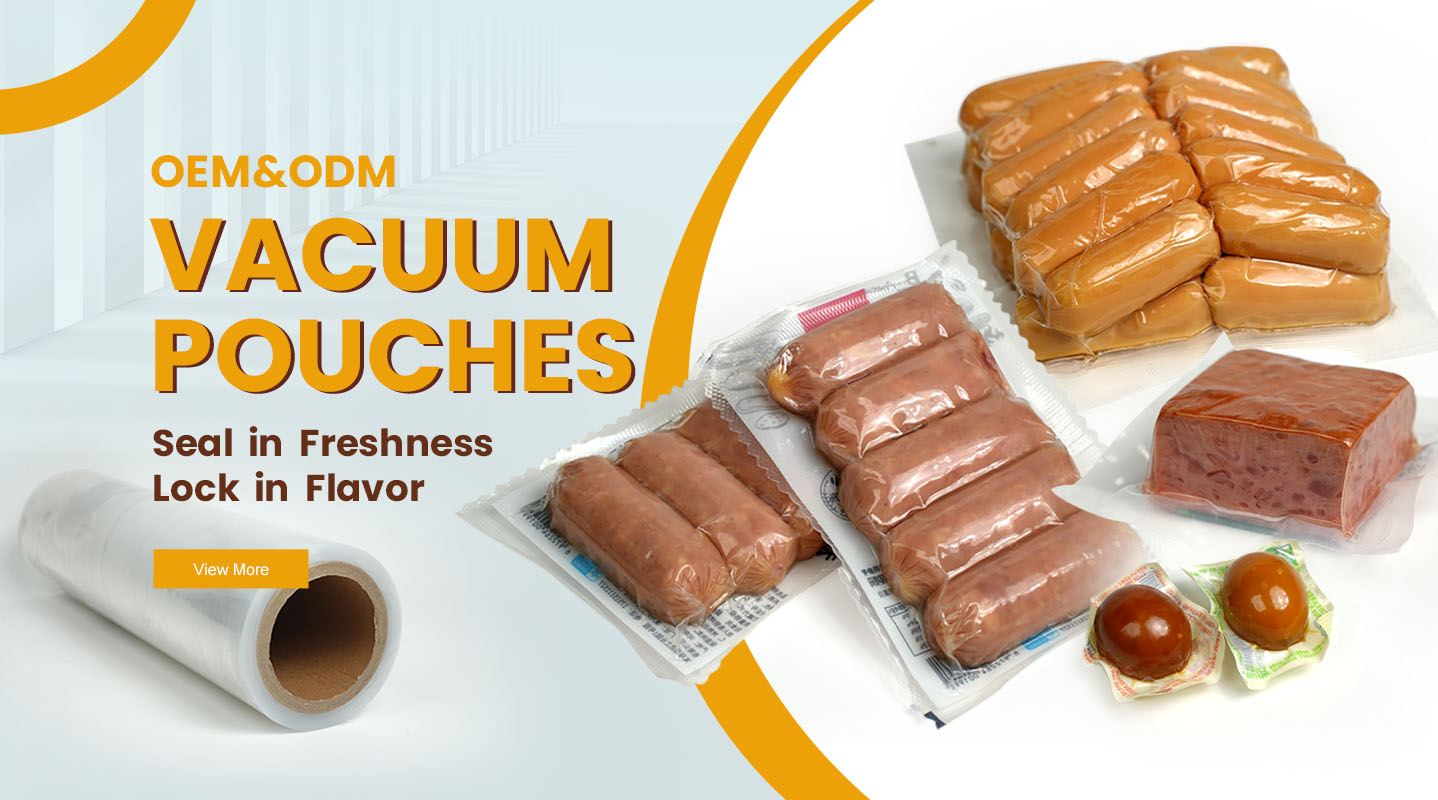
Coextruded barrier film is used when food packaging needs more than basic sealing. It combines several material layers in one film structure, so each layer can perform a different function. For meat, seafood, cheese, nuts, ready meals, and frozen food, coextruded barrier film helps control oxygen, moisture, puncture risk, and package stability during storage and transport.
Meat products need strong oxygen control and puncture resistance. Coextruded Food Packaging Film can help reduce oxidation, protect color, and maintain vacuum performance. For bone-in meat or heavy cuts, the film structure should also resist sharp edges and pressure.
Seafood contains moisture and is often stored at low temperatures. Barrier film used for seafood should remain flexible after freezing and reduce leakage caused by ice crystals, shells, or rough handling.
Cheese and prepared meals often require controlled barrier properties to reduce flavor loss and moisture changes. Stable sealing is also important because these products may contain oil, sauce, or liquid.
Unlike single-layer film, coextruded film can combine sealing layer, strength layer, and barrier layer in one structure. Common structures may include PE, PA, EVOH, or other functional materials, depending on the product requirement.
| Layer Function | Packaging Value |
|---|---|
| Sealing layer | Supports heat sealing |
| Barrier layer | Reduces oxygen transfer |
| Strength layer | Improves puncture resistance |
| Outer layer | Helps machine running and protection |
Before ordering, buyers should confirm product type, storage temperature, shelf-life target, film thickness, packaging machine type, and export requirements. A professional coextruded film manufacturer can adjust film structure according to vacuum packaging, thermoforming, tray sealing, or roll-stock packing needs.
Coextruded barrier film is best used when food needs stable freshness protection and reliable performance across production, storage, and logistics.