Choosing the right packaging film for sausages is not only about “making it airtight”. Film selection affects oxidation, purge control, seal integrity, line speed, and how consistently you can hit a shelf-life target across different distribution conditions. The best results come from matching the sausage type + packaging method + barrier level + machine capability into one engineered spec.
Sausage products vary widely in sensitivity to oxygen, moisture loss, and physical damage. Before you pick a film structure, define these practical inputs:
Product state: fresh, cooked, smoked, dry or semi-dry, frozen.
Fat content and spices: higher fat and certain seasonings oxidize faster, so oxygen control becomes more important.
Surface moisture and purge: affects anti-fog needs, seal contamination tolerance, and WVTR expectations.
Target shelf life and temperature: chilled distribution is very different from frozen distribution; barrier needs are not the same.
Presentation goal: transparency, gloss, print coverage, and whether you need a “tight” look.
If your goal is to extend chilled shelf life, oxygen management is usually the first constraint. Industry references often classify a film as “high oxygen barrier” when its OTR is below 15.5 cc/m² per 24 h (converted from 1 cc/100 in²/24 h).
Your equipment and process determine the film families you should prioritize:
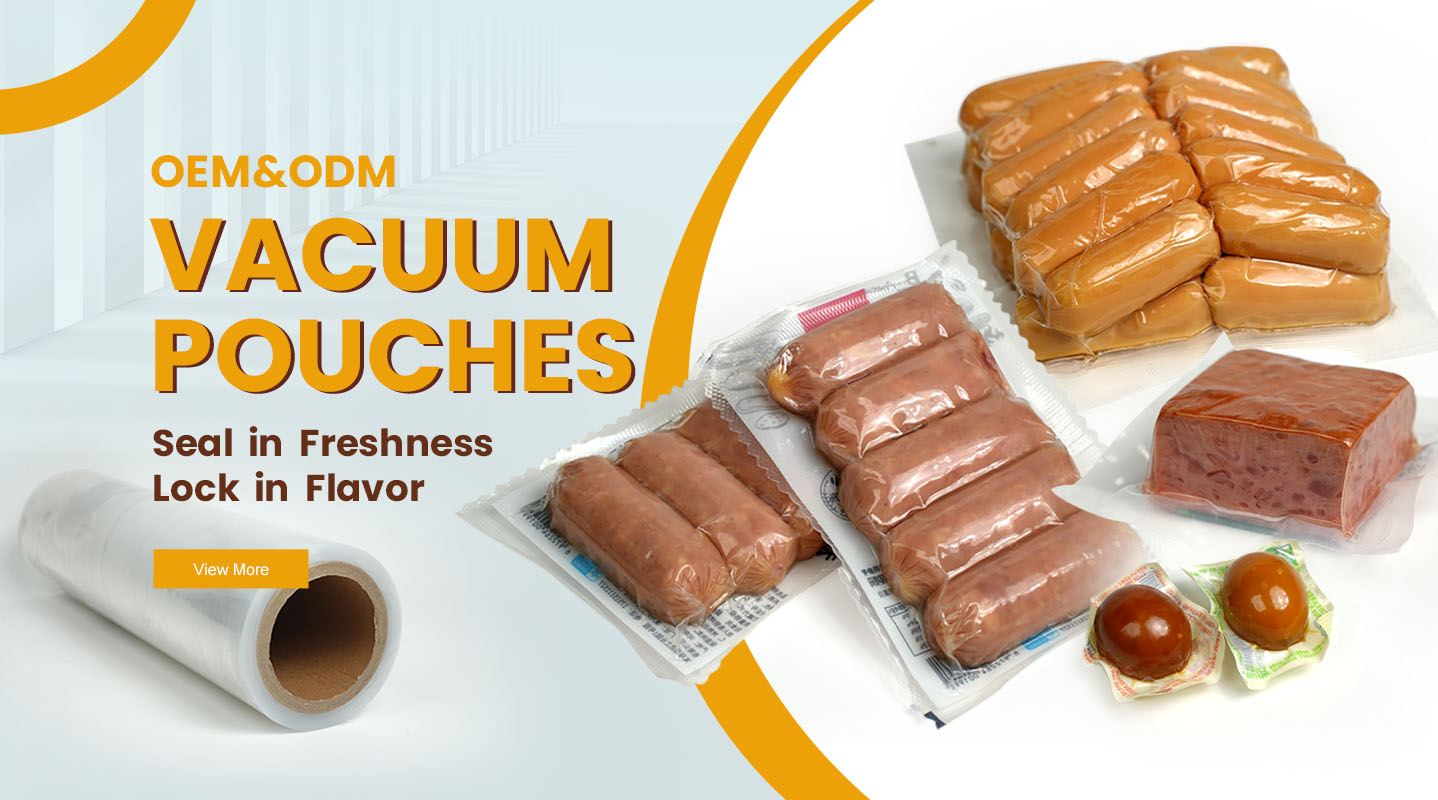
Vacuum Pouch or vacuum bag: strong oxygen control and good contact with product. Often used for cooked sausages and multi-pack formats.
Thermoforming pack: efficient for high throughput; you need a forming web plus a top web with reliable sealing and puncture resistance. JINBORUN’s vacuum thermoForming Film is positioned for meat and sausage applications on automatic thermoforming lines.
MAP tray or pillow formats: film must hold gas mixture and maintain seals. Research summaries on processed meats show that higher CO₂ atmospheres can be favorable for storing pre-cooked sausages, and one cited example reports 70% CO₂ + 30% N₂ supporting storage at 4°C up to 28 days for frankfurter-type sausages under the tested conditions.
The packaging method you pick should be consistent with your operational priorities: fastest output per shift, lowest material cost per pack, best leak performance, or best display.
Barrier requirements are easiest to communicate using OTR as your anchor. Film OTR varies by material, thickness, and humidity. As a useful reference point for barrier “levels”, one published example categorizes packaging films by OTR values around 3.95, 56, and over 1000 cm³/m²/day for low, medium, and high oxygen barrier performance in meat storage research.
A practical approach for sausage products:
Fresh sausages: often benefit from medium to high oxygen barrier depending on whether color retention and oxidation control are critical. MAP strategies vary widely across studies, including mixes with CO₂, O₂, and N₂.
Cooked or pre-cooked sausages: typically prioritize high oxygen barrier to slow lipid oxidation and quality loss, especially when shelf life is longer and temperature control is variable.
Frozen sausages: barrier still matters, but low-temperature toughness, seal reliability at cold, and puncture resistance during handling often become equally important. JINBORUN positions frozen Food Packaging Film for low-temperature tolerance and sealing performance for frozen meat and related products.
If you are using an EVOH-based barrier layer for strong oxygen control, note that oxygen barrier performance can change with moisture and structure design, so it’s important to specify the test condition that matches your real storage environment.
Sausage packaging fails in predictable ways: micro-leaks at seals, pinholes from clips or edges, and seal contamination from moisture or oils. Your film spec should explicitly address:
Puncture resistance for sharp edges, clips, or dense multi-packs.
Seal strength and seal window: stable sealing across temperature variation reduces leak rates and rework.
Hot tack if you are sealing at higher speeds and need seals to hold immediately.
Low-temperature impact resistance for frozen distribution.
Slip and machinability: stable COF helps consistent feeding and fewer mispacks.
For thermoforming lines, you also need to define forming depth, draw ratio, and whether you need a “bone-containing” style puncture-resistant approach for harsh products. JINBORUN offers forming-film categories designed around different food packaging challenges.
Selection guide for common sausage programs:
| Sausage program | Typical pack method | Film direction | Barrier focus | What to validate on your line |
|---|---|---|---|---|
| Fresh chilled sausages | MAP tray or vacuum | Top film or pouch | Medium to high OTR control | Leak rate, fogging, color stability, seal contamination tolerance |
| Cooked sausages and frankfurters | Vacuum or MAP | Pouch or thermoforming | High oxygen barrier | Seal strength, pinhole resistance, OTR under your storage humidity |
| Smoked sausages | Vacuum or thermoforming | Top web and bottom web | High oxygen barrier | Tight pack appearance, puncture resistance, print durability |
| Frozen sausages | Vacuum bag or pouch | Pouch | Balanced barrier + cold toughness | Low-temp drop tests, seal integrity after freezing, abrasion resistance |
This table is a starting point; final specs should be confirmed by pack testing, including dye leak or bubble leak checks and shelf-life validation.
From a manufacturing and supply perspective, consistency and customization matter as much as the base material. JINBORUN describes itself as a producer of co-extrusion barrier food film and vacuum bags, supplying functional films including forming film, barrier forming film, vacuum pouch, and Printing And Laminated Film, with an established team and production capability.
For sausage applications specifically, JINBORUN lists sausage packaging film within its food packaging film categories, which is useful when you want to standardize specs across multiple meat SKUs while keeping a consistent supplier and process window.
If your operation requires private label graphics or standardized multilayer performance across regions, an OEM/ODM-style development workflow is typically the most efficient path: define performance targets first, then lock the structure, then scale the print and logistics plan.
Confirm packaging method: vacuum, thermoforming, or MAP
Set barrier target with OTR and test condition
Define thickness range and puncture performance requirements
Validate sealing window and leak performance at your actual line speed
Run a pilot with shelf-life checks, not only initial appearance
If you share your sausage type, pack size, and packaging equipment model, JINBORUN’s film options can be narrowed to a smaller set of structures and test plans so you reach stable production faster.