Packaging film strength is not a single number. For Food Packaging Films, Vacuum Pouches, thermoForming Films, and printed laminated structures, “strength” is the combined ability to survive converting, run smoothly on packing lines, and protect product integrity during distribution. At JINBORUN, we treat film strength testing as a repeatable quality system: define the real packaging stress, select the right standards, then lock in targets that are easy to verify batch after batch.
JINBORUN focuses on co-extrusion barrier food films and vacuum bags, plus forming film and Printing And Laminated Film solutions, with in-house manufacturing capacity and a stable production team in Jiangmen, Guangdong.
Before you test, map where the film fails in real life:
During forming and sealing: too soft, too stiff, weak seal area, seal peel failure, or distortion under heat.
During handling and transport: pinholes, punctures from sharp edges, tear growth from small nicks, drop impacts.
During storage: barrier drift caused by thickness variation, micro-cracks, or stress whitening.
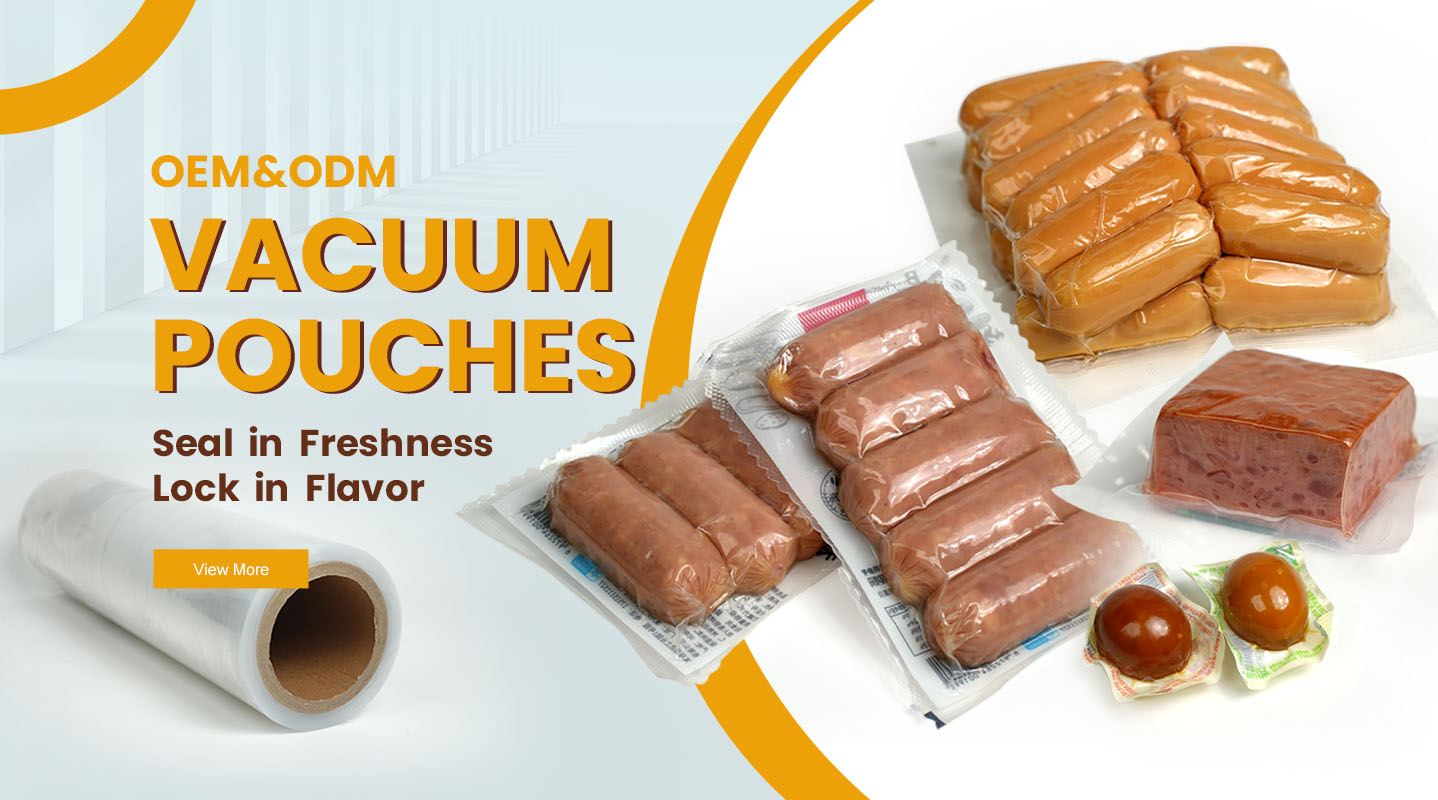
For vacuum and forming applications, these stresses are especially common: sharp product corners, bone-in protein packaging, and deep draw forming all concentrate force into small areas. JINBORUN’s forming film and vacuum packaging product lines are built around these realities, so the test plan typically includes tensile, tear, friction, impact, seal strength, and often oxygen barrier verification.
Below is a practical lab set that covers most packaging-film strength questions from development to incoming QC. Use it as a baseline, then add application-specific checks.
| What you want to prevent | Recommended test | What you get | Practical note |
|---|---|---|---|
| Film stretching, snapping, web breaks | Tensile (ASTM D882) | Tensile strength, elongation, modulus | Designed for thin films under 1.0 mm thickness |
| Tears growing from a notch or nick | Tear propagation (ASTM D1938) | Force to propagate a tear | Applicable for film/thin sheeting up to 1 mm ([ASTM International |
| Poor machine runnability, blocking, slipping | Coefficient of friction (ASTM D1894) | Static and kinetic COF | Measures friction sliding over itself or another surface ([ASTM International |
| Drop damage, toughness problems | Dart impact (ASTM D1709 / ISO 7765-1) | Impact resistance by free-falling dart | Widely used for film toughness comparison and QC |
| Seal opens during handling | Seal strength (ASTM F88/F88M) | Force required to separate a sealed strip | Common test speed range is 200–300 mm/min ([ASTM International |
| Oxygen barrier performance tied to structure | OTR (ASTM D3985) | Oxygen transmission rate, permeance, permeability | For film, laminates, and coextrusions at steady state ([ASTM International |
Use ASTM D882 when you need confidence that the film won’t “neck down,” stretch permanently, or snap during converting or packaging. This standard is commonly used for thin film tensile properties and is intended for films under 1.0 mm thickness. Best practice: test both machine direction and transverse direction, because film orientation and cooling history often create different strength behavior in each direction.
A packaging film can pass tensile tests and still fail in the field because small nicks turn into long tears. ASTM D1938 measures the force needed to propagate a tear in plastic film and thin sheeting, applicable up to 1 mm thickness, and is not intended for brittle-failure materials. Best practice: if your customer sees “edge tears,” test samples taken from slit edges and compare them to center-web samples to identify slitting or handling sensitivity.
Friction is a hidden “strength” factor: too much friction causes jams; too little friction can cause misfeeds and poor stack control. ASTM D1894 determines static and kinetic coefficients of friction of plastic film and sheeting under specified conditions. Best practice: define the real contact pair for your process, such as film-to-film, film-to-metal, or film-to-sealing belt, then keep that pairing consistent in QC.
This method evaluates impact resistance by a free-falling dart and is widely used as a toughness indicator for packaging films. Best practice: use it to compare structures and resin blends during development, then lock a minimum threshold as a production guardrail.
Seal strength often determines whether a package “fails” in the supply chain. ASTM F88 measures the force required to separate a sealed strip and is commonly run on a universal testing machine; a typical test speed range referenced in practice is 200–300 mm/min. Best practice: always record the mode of failure you observe during peel, because different failure modes point to different fixes in sealing temperature, dwell, pressure, or sealant layer design.
For many food packages, strength must be paired with barrier. ASTM D3985 covers steady-state oxygen transmission through plastics in film, laminates, and coextrusions, reporting OTR and related permeability metrics. Best practice: treat OTR as a structure integrity check as well. Large shifts can indicate thickness variation, layer non-uniformity, or microscopic defects.
Strength testing becomes truly valuable when it is tied to process control. On the manufacturing side, you get faster decision-making if you standardize:
Sampling frequency by product family and thickness range
Pass/fail windows that match the customer’s packing line realities
Traceability so a single roll can be linked to resin batch, run settings, and QC results
This is where JINBORUN positions itself as a long-term solution provider: co-extrusion barrier structures, forming films, vacuum pouch formats, and printing and laminated options let you tune strength, seal behavior, and barrier as one system, not as isolated materials. If your project requires OEM/ODM development work, a clear test plan is the fastest way to align targets, shorten iterations, and protect scale-up stability.
To test the strength of packaging film correctly, choose tests that match real failure modes: tensile for web integrity, tear for notch sensitivity, COF for runnability, dart impact for toughness, seal strength for package integrity, and OTR when barrier performance is part of the requirement. Using recognized standards like ASTM D882, D1938, D1894, D1709, F88, and D3985 makes results comparable and defensible across suppliers and production lots. With a standardized test matrix and consistent manufacturing controls, you can specify packaging films with confidence and support wholesale supply that stays stable across long production cycles.