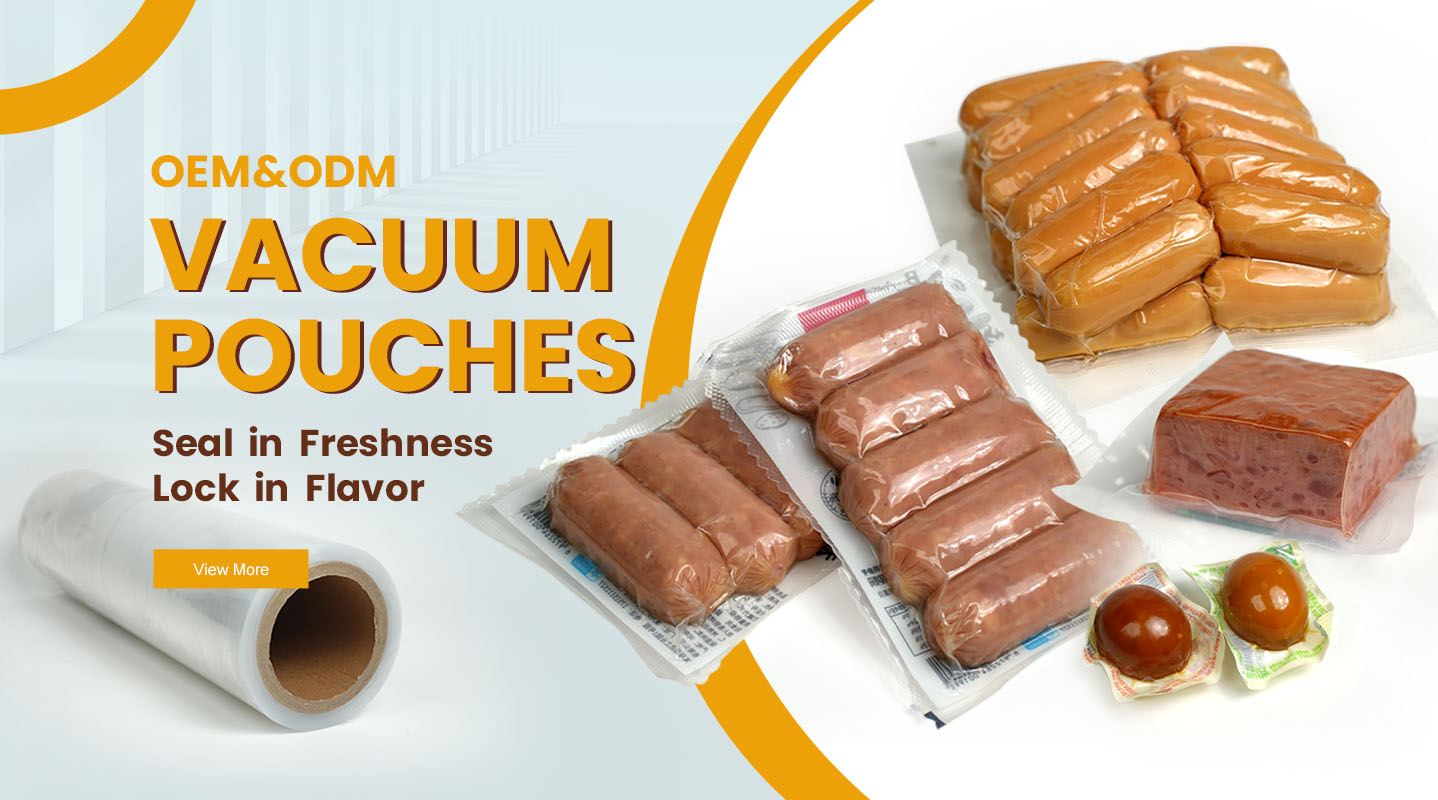
When selecting vacuum bags for frozen food, bag thickness is one of the most critical performance factors. The right gauge directly influences durability, barrier protection, puncture resistance, and shelf life in frozen storage.
High-performance meat packaging film balances food safety, shelf life, visual appeal, and machinability. Below is a practical overview of the plastics and functional layers commonly engineered into films for fresh red meat, poultry, and processed products.
Vacuum packaging removes most of the oxygen around a product and then seals it inside a barrier film. By lowering residual oxygen and isolating the product from moisture, odors, and airborne contaminants, the biochemical and microbial changes that cause spoilage slow down dramatically.
Barrier film is a multilayer plastic or paper–plastic laminate engineered to slow or block the transmission of gases, water vapor, aromas, oils, and light that can degrade food. By controlling the movement of oxygen, moisture, and other small molecules, barrier films preserve flavor, color, texture, and nutrition—directly extending shelf life and protecting product safety from the factory line to the consumer’s kitchen.
Proper food storage plays a crucial role in maintaining freshness, taste, and nutritional value. Vacuum pouches are one of the most efficient and widely used packaging solutions in both household and industrial settings. Selecting the right pouch type can significantly impact food preservation performance and cost-effectiveness.
Food packaging film is a critical component in the modern food supply chain. It protects products from contamination, preserves freshness, extends shelf life, and supports product visibility and branding. Understanding what food packaging film is made of helps food manufacturers, retailers, and consumers make informed choices about packaging performance and safety.
Food product freshness is one of the most critical factors in customer satisfaction and brand reputation. Packaging plays a central role in preserving that freshness by controlling the internal atmosphere of the package. Among the physical attributes of packaging materials, oxygen and moisture barrier properties are paramount in determining how long food maintains its quality, safety, and sensory attributes during storage and transit.
In modern flexible packaging, co-extrusion bags and laminated composite bags are two of the most widely used options for protecting products during storage and transportation. While both bag types achieve multilayer performance and barrier properties, they differ fundamentally in their manufacturing methods, material structure, mechanical behavior, performance, cost, and common applications.
Ethylene vinyl alcohol copolymer (EVOH) has emerged as a key material in high-performance food packaging films. Its unique combination of properties enables food producers and packaging manufacturers to greatly enhance product protection and shelf life while meeting evolving consumer and regulatory demands.
High barrier films are essential in food packaging to protect products from oxygen, moisture, light, oils, and other environmental factors that lead to spoilage. These films extend shelf life, preserve flavor and aroma, and maintain food quality throughout distribution and storage.